Why Your Dental Website Isn’t Ranking on Google (Even If It Looks Good)
Many dental practice owners assume a visually attractive website will automatically attract new patients. While a polished design builds trust, it does not guarantee visibility on Google. You might be asking “why isn’t my dental website ranking?” despite having a great site. The answer often lies beneath the surface.
A high-ranking dental website requires both strong design and solid technical SEO foundations.
Design vs SEO — Why Looks Aren’t Enough
A website’s design matters to patients, but search engines don’t “see” beauty the way humans do. Google’s ranking system is driven by technical factors that determine whether it can find, read, and evaluate your site’s content properly. A visually sleek homepage won’t rank highly if Google’s bots can’t crawl it, if key SEO elements are missing, or if your content doesn’t match what users are searching for. Many dental websites invest in appearance but overlook the infrastructure that makes a site discoverable and indexable by search engines.

Technical SEO — The Invisible Foundation
Technical SEO refers to backend elements that help search engines understand and rank your website. Nearly half of dental websites fail basic technical SEO checks, meaning Google may struggle to access or interpret their content properly. Common issues include:
- Poor website architecture. This makes it hard for crawlers to reach every page.
- Slow page speed. Slow loading times signal poor user experience and can hurt rankings.
- Lack of XML sitemap. Without a sitemap, Google may not find all your pages.
- Mobile-unfriendly design. If a site isn’t responsive, Google won’t rank it well on mobile searches.
Content and On-Page Signals
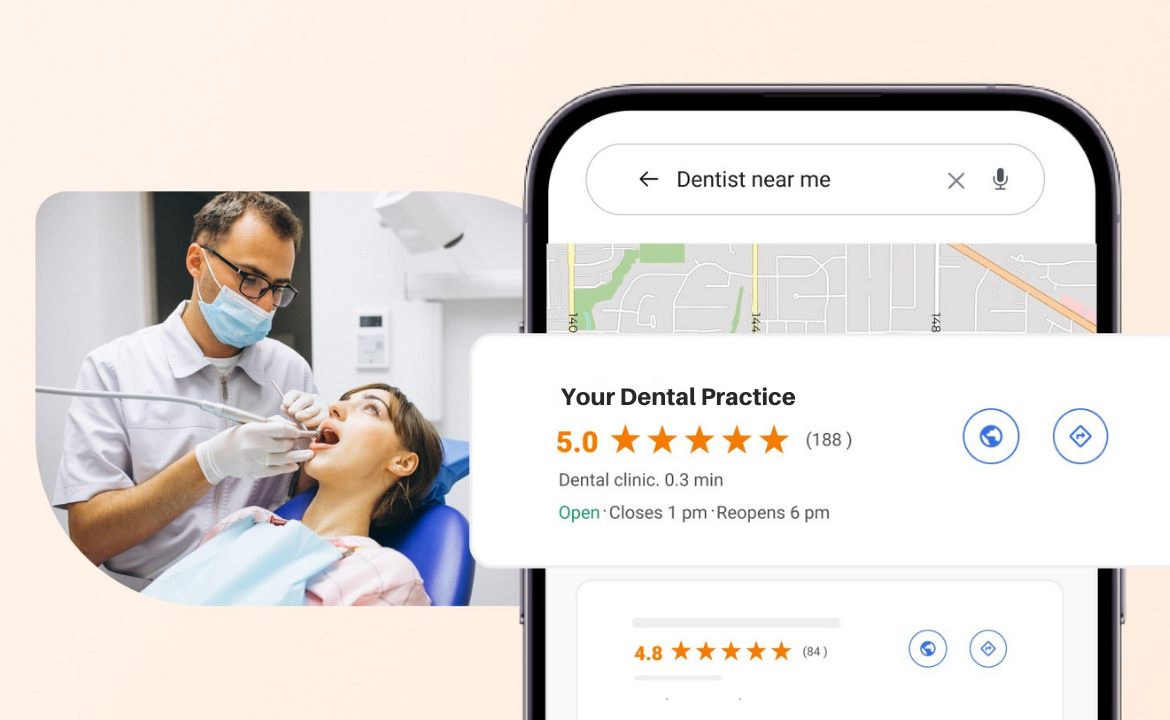
Search engines need signals that your content matches what patients are searching for. If your site doesn’t include relevant keywords (like “dentist near me”, “dental implants [location]”, or “emergency dentist”), Google won’t know which queries to rank you for. This is a common SEO mistake where sites prioritise broad messaging over strategically placed, informative content that helps users – and search engines – understand your services.
Clear page titles, meta descriptions, headers (H1, H2), and descriptive content help Google match your pages to appropriate search queries. Without these, your beautiful content may as well be invisible to search engines.
Local SEO and Relevance
Google uses local signals — including your Google Business Profile, consistent practice name/address/phone across the web, and local citations — when deciding which dental practices to show in local search results. If these signals are weak or inconsistent, your site may struggle to rank even if its design is visually engaging.
Positive Google reviews also play a role. They increase credibility and help with local search visibility, which indirectly improves dental website SEO performance.
FINAL THOUGHTS
A website that looks great isn’t enough by itself to achieve high rankings on Google. To improve your dental website SEO, you need a strong technical foundation, well-optimised content, local SEO signals, and a site structure that search engines and patients both understand. If your site is visually appealing but still invisible in search results, this likely points to underlying SEO issues. Dentify Digital can help audit and optimise your site’s SEO performance – get in touch to improve your rankings, attract more local patients, and turn your website into a dependable new-patient generator.