logotype
  • HOME
  • SERVICES
    • WEB DESIGN
    • DIGITAL MARKETING
    • BRANDING
    • SEO
    • PHOTOGRAPHY
    • REPUTATION MANAGEMENT
  • BLOG
  • OUR WORK
  • RESOURCES
  • CONTACT US
    Contact us

    We are Here:

    Chancellors House, 3 Brampton Lane, Hendon, England, NW4 4AB

    Send mail:

    info@dentifydigital.com

    Call Us:

    020 4634 6363
    Facebook-fLinkedin-inInstagram
    Get in Touch

    Your email address will not be published. Required fields are marked *

    SEARCH
    logotype
    logotype
    • HOME
    • SERVICES
      • WEB DESIGN
      • DIGITAL MARKETING
      • BRANDING
      • SEO
      • PHOTOGRAPHY
      • REPUTATION MANAGEMENT
    • BLOG
    • OUR WORK
    • RESOURCES
    • CONTACT US
      Contact us

      We are Here:

      Chancellors House, 3 Brampton Lane, Hendon, England, NW4 4AB

      Send mail:

      info@dentifydigital.com

      Call Us:

      020 4634 6363
      Facebook-fLinkedin-inInstagram
      Get in Touch

      Your email address will not be published. Required fields are marked *

      SEARCH
      logotype
      • HOME
      • SERVICES
        • WEB DESIGN
        • DIGITAL MARKETING
        • BRANDING
        • SEO
        • PHOTOGRAPHY
        • REPUTATION MANAGEMENT
      • BLOG
      • OUR WORK
      • RESOURCES
      • CONTACT US
        Contact us

        We are Here:

        Chancellors House, 3 Brampton Lane, Hendon, England, NW4 4AB

        Send mail:

        info@dentifydigital.com

        Call Us:

        020 4634 6363
        Facebook-fLinkedin-inInstagram
        Get in Touch

        Your email address will not be published. Required fields are marked *

        Trends & Future
        HomeArchive by Category "Trends & Future"

        Category: Trends & Future

        Robot Receptionist
        Trends & Future
        April 17, 2026by Alfie

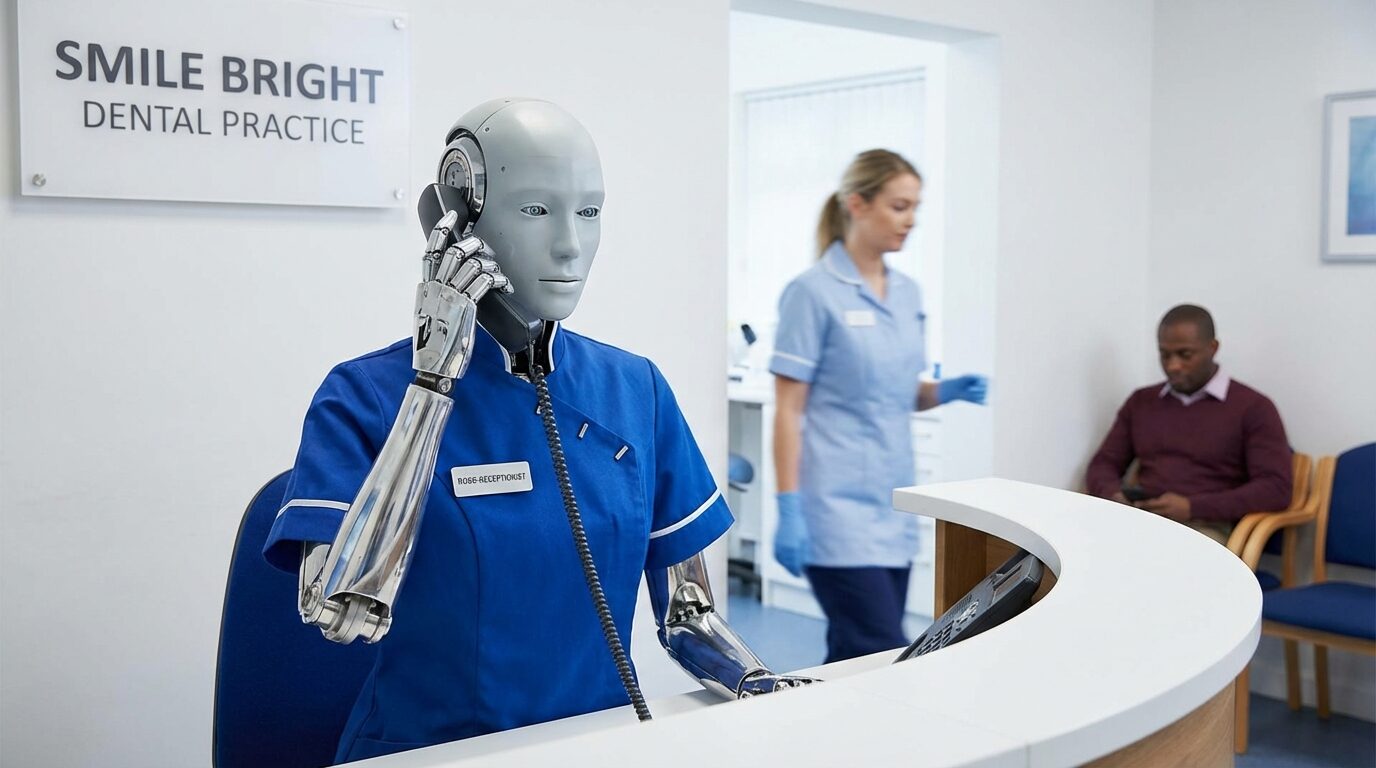
        Can AI actually answer my practice phone calls?

        Never Miss a New Patient: The Reality of AI Receptionists in 2026

        It is 2:00 AM on a Saturday. A prospective patient wakes up with a throbbing, unbearable toothache. Desperate, they search “emergency dentist near me” on Google and call the first result.

        It rings three times and goes to a standard voicemail: “You have reached Smith Dental. Our hours are 9 to 5. Please leave a message.”

        The patient hangs up immediately. They do not leave a message. They scroll down to the next practice on Google and call them instead. You just paid £5 for that Google Ads click, but your competitor is going to get the £300 emergency fee and the potential £3,000 implant treatment that follows.

        For decades, the “voicemail graveyard” has been an accepted cost of doing business. But in 2026, a new wave of Conversational AI has fundamentally changed how dental practices handle missed calls.

        Asking “Can AI actually answer my practice phone calls?” is no longer a futuristic concept. It is a reality that is already capturing lost revenue for early adopters.

        The Problem with the Old "Press 1" Systems

        When dentists hear “automated answering,” they usually think of traditional Interactive Voice Response (IVR) systems.

        “Press 1 for reception. Press 2 for billing. Press 3 if you are a robot.”

        These systems are frustrating. They create friction. High-value patients looking for cosmetic treatments do not want to navigate a phone maze. They want to speak to a human, or at the very least, they want their specific problem acknowledged immediately.

        Enter Conversational AI

        The AI receptionists of 2026 are not IVR systems. They are powered by Large Language Models (LLMs) that understand natural speech, context, and intent.

        When the phone rings, the AI answers. The patient speaks naturally.
        “Hi, my veneer just popped off and I’m panicking. Can someone see me tomorrow?”

        The AI listens, processes the request, and responds conversationally:

        “I am so sorry to hear that, I know that can be stressful. We do have emergency slots reserved for tomorrow. Let me just get your name and date of birth to check the diary.”

        Triaging the 2 AM Emergency

        The greatest superpower of an AI voice assistant is that it does not sleep, take lunch breaks, or call in sick.

        For a private practice, capturing out-of-hours emergencies is highly profitable. An AI receptionist can be programmed with specific triage pathways:

        Assess the urgency: The AI asks if there is severe swelling, bleeding, or difficulty breathing (directing to A&E if necessary).

        • Capture the lead: It takes the patient’s name, phone number, and a description of the problem.
        • Book the slot: Integrated with your practice management software, it can offer provisional emergency slots for the following morning.
        • Alert the team: It instantly texts or emails the practice manager with a summary of the call.

        When your reception team unlocks the doors at 8:30 AM, the diary is already populated with pre-triaged emergencies.

        Does It Sound Like a Robot?

        This is the biggest fear for practice owners. You have spent years building a brand based on empathy and premium care. You do not want a metallic “Dalek” voice answering your phones.

        The technology has crossed the uncanny valley. Modern AI agents feature:

        Natural pauses and breathing sounds.

        Localised accents (e.g., a natural-sounding British accent rather than a generic American Siri).

        Interruption handling: If the patient interrupts the AI to add a detail, the AI stops talking, listens, and adjusts its response.

        While a patient might eventually realise they are speaking to an incredibly smart digital assistant, the immediate relief of having their problem handled far outweighs the lack of a human heartbeat.

        The Daytime Wingman

        AI isn’t just for 2 AM. It is the ultimate pressure-release valve for your front desk during the “rush hours” of 8:30 AM and 5:00 PM.

        If your receptionist is explaining a £5,000 Invisalign treatment plan to a patient at the desk, they should not be distracted by a ringing phone. The AI acts as an overflow valve. It answers the call on the third ring, handles the simple query (like “What are your opening hours?” or “Can I reschedule my hygiene visit?”), and lets your human team focus on high-value, face-to-face interactions.

        Summary: Is It Worth the Investment?

        An AI voice assistant is not designed to replace your Treatment Coordinator or your lead receptionist. It is designed to replace your voicemail.

        • Stop the bleed: Capture high-intent patients who refuse to leave voicemails.
        • Pre-triage out of hours: Turn 2 AM panic into booked 9 AM appointments.
        • Protect your front desk: Reduce burnout by filtering out low-level admin calls during busy periods.
        • Increase ROI: If the AI saves just one implant or emergency lead a month, it pays for its software subscription ten times over.

        If your practice misses more than 10 calls a week, you are leaking revenue. AI is the easiest way to plug the hole.

        Click here to book a strategy call with Dentify Digital to see a live demo of a dental AI receptionist in action.

        Read More
        Dentist tiktok
        Trends & Future
        March 24, 2026by Alfie

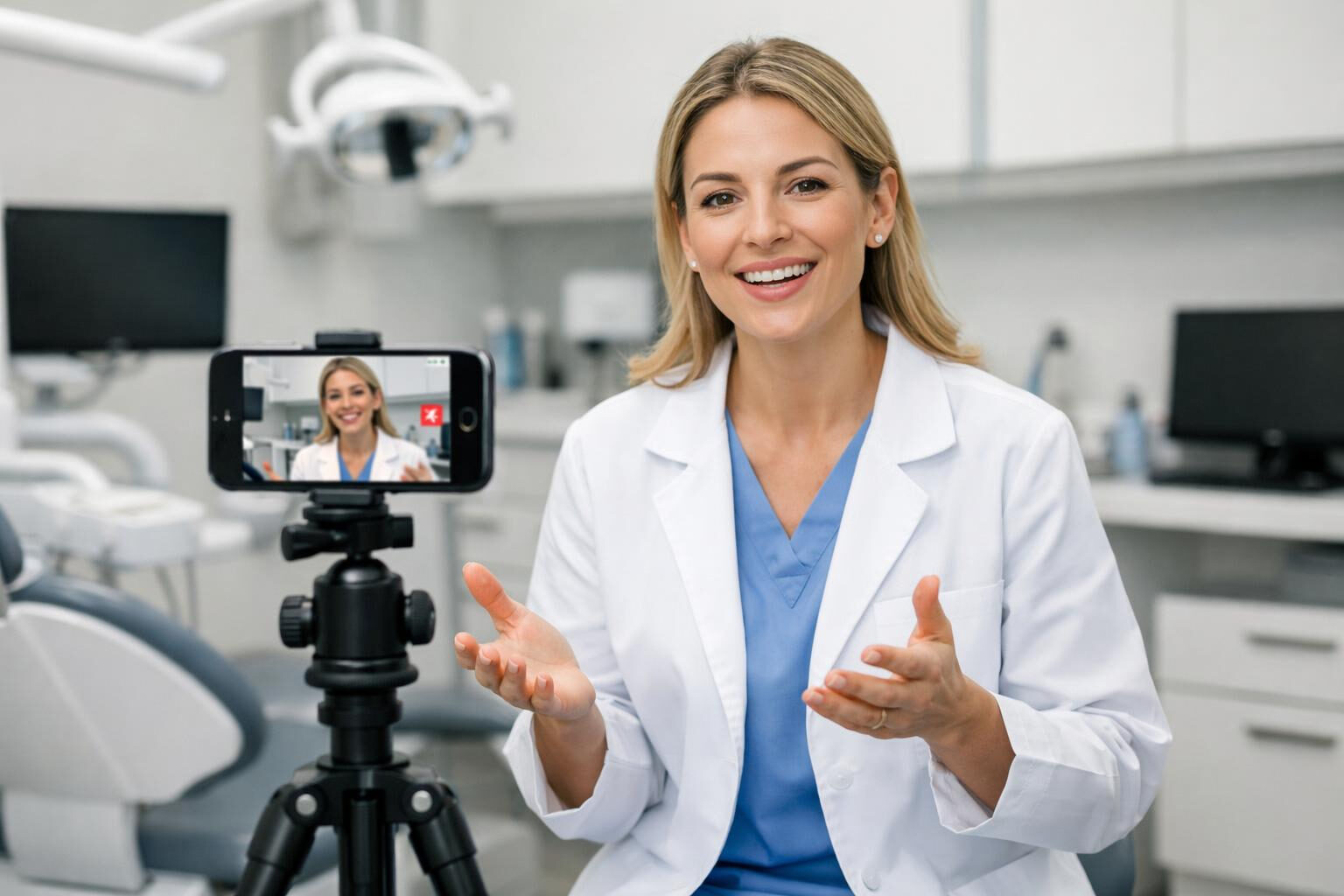
        Do I need a TikTok account for my dental practice?

        If you spent any time on social media over the last year, you’ve seen them: the “Turkey Teeth” warnings, the satisfying “reveal” videos of composite bonding, and dental nurses doing coordinated dances in the sterilisation room.

        TikTok has moved from a niche app for teenagers to a powerhouse that influences healthcare decisions. But for a busy practice owner, it poses a difficult question: Is this a vital business tool or a massive time-waster?

        The answer depends entirely on what you are trying to sell and who you are trying to treat.

        The "Composite Bonding" Boom

        TikTok is responsible for the single biggest surge in cosmetic dentistry demand in a generation. The platform’s algorithm is a “discovery engine.” Unlike Instagram, where people mostly see accounts they already follow, TikTok pushes your content to strangers based on their interests.

        If a 22-year-old in your city watches one video about “smile makeovers,” TikTok will start showing them more. If you are the local dentist appearing on their feed, you become the instant authority.

        TikTok is perfect for:

        • Invisalign and clear aligners.
        • Composite bonding and edge bonding.
        • Professional teeth whitening.
        • Boutique “experience-led” dentistry.

        The Demographic Mismatch

        Before you start filming, you must look at your business goals.

        TikTok’s primary demographic still skews younger. According to 2026 data, the largest user blocks are Gen Z and Millennials. If your goal is to grow your Implant or All-on-4 department, TikTok might not be the most efficient use of your budget.

        Patients seeking dental implants (typically aged 55+) are far more likely to be found on Facebook or searching via Google. Spending four hours a week making TikTok transitions to reach an audience that doesn’t have missing teeth is a poor “Return on Effort.”

        The "Humanity" Factor

        One area where TikTok wins for every practice—regardless of age—is humanising the brand.

        Modern patients are terrified of the “scary dentist.” TikTok allows you to show the personality behind the mask. Seeing a dentist laugh, explain a procedure simply, or introduce the team removes the “clinical barrier.” Even an older patient might find your practice through a Google search but then check your TikTok to see if you seem “nice.”

        The Content Trap: Dances vs. Education

        Many dentists avoid TikTok because they don’t want to dance. Good news: You don’t have to.

        In fact, “educational entertainment” (Edu-tain-ment) often performs better for healthcare professionals.

        • Reaction videos: Reacting to “DIY whitening” hacks (and explaining why they are dangerous).
        • Behind the scenes: Showing how a 3D scanner works.
        • The “Reveal”: The classic before-and-after, focusing on the patient’s emotional reaction.

        Summary: Should You Join?

        YES, if: You want to grow your cosmetic, bonding, or ortho list and have a team member who is enthusiastic about filming.

        NO, if: You are a strictly referral-based specialist or your focus is exclusively on geriatric or complex restorative dentistry.

        If you decide to join, remember that consistency is more important than production value. A raw, honest video filmed on an iPhone often gets more views than a polished corporate film.

        Read More
        virtual consult
        Trends & Future
        March 3, 2026by Alfie

        Virtual Consultations: A Flash in the Pan or the New Normal?

        During the pandemic, “Video Triage” was a survival tool. It was the only way to see if a patient’s swelling was a minor annoyance or a life-threatening abscess.

        But as we move through 2026, video triage has evolved. It is no longer an emergency fallback; it is one of the most powerful low-barrier-to-entry marketing tools in a private dentist’s arsenal.

        If you aren’t offering virtual “Discovery Calls” or “Smile Assessments,” you are missing a massive opportunity to pre-qualify patients before they ever step foot in your practice.

        What Exactly is Video Triage?

        In a dental marketing context, video triage (or teledentistry) is a 10–15 minute synchronous video call between a clinician (or a highly trained Treatment Coordinator) and a prospective patient.

        It serves three main purposes:

        1. Clinical Screening: Determining the urgency of an issue or the suitability for a specific treatment (like Invisalign or Implants).
        2. Anxiety Reduction: Letting nervous patients meet you from the safety of their own sofa.
        3. Sales Qualification: Ensuring the patient understands the rough costs and timelines before you block out an hour of expensive surgery time.

        The "Anxiety Buffer": Meeting Them on Their Turf

        For many people, the dental practice is a place of smells, sounds, and “the chair.” This creates a psychological barrier.

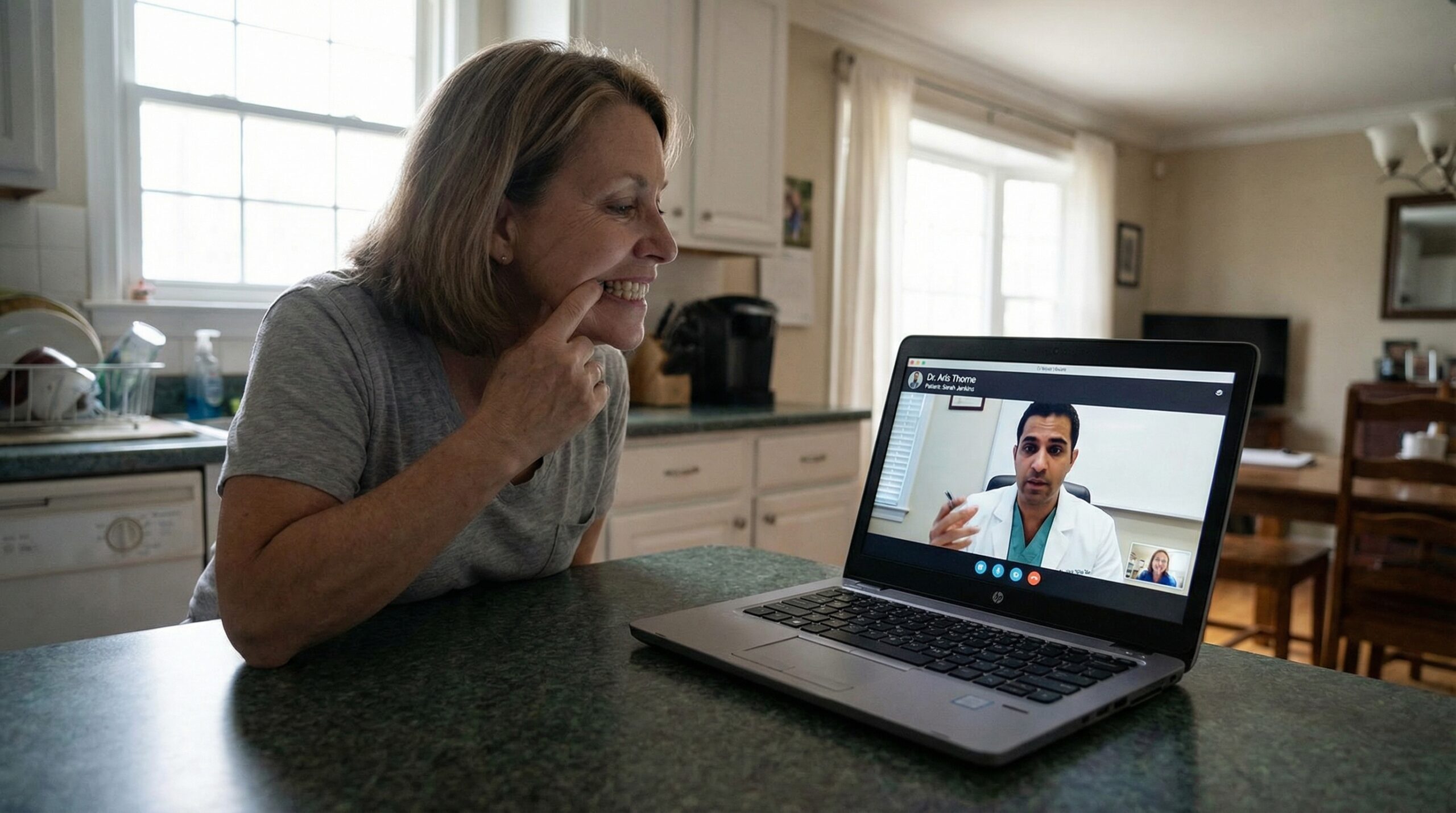
        Video triage removes the “clinical” environment. When a patient speaks to you via a screen from their kitchen table, their heart rate is lower. They feel more in control.

        By building rapport virtually, you are “pre-selling” the trust. By the time they arrive for their physical exam, the hardest part—the first introduction—is already done. They aren’t coming to see “The Dentist”; they are coming to see you, someone they’ve already chatted with.

        The 2026 Marketing Workflow

        In 2026, the most successful private practices use a “Virtual First” funnel for cosmetic enquiries:

        The Ad: A Facebook ad for “Dental Implants.”

        The CTA: Instead of “Book a £150 Consultation,” the call-to-action is “Book a Free 15-Minute Video Discovery Call.”

        The Call: You (or your TCO) look at their smile on screen. You explain the process, give a “starting from” price, and answer their biggest fears.

        The Result: You only book the physical consultation for patients who are motivated, informed, and financially ready.

        This protects your “Golden Hours.” Why spend 30 minutes in the surgery explaining to someone that they aren’t a candidate for bonding when you could have done that in 5 minutes over Zoom?

        Technical & Regulatory Guardrails

        While video triage is a marketing powerhouse, you must stay within the GDC and data protection lines:

        Prescription Only Medicines (POMs): You cannot use a video call to “prescribe” Botox or even certain high-strength whitening without a face-to-face physical assessment first.

        The “Advice vs. Diagnosis” Distinction: You must be clear that a video call is a consultation or screening, not a definitive diagnosis. You cannot see everything on a webcam that you can see with a probe and an X-ray.

        Platform Security: Do not use FaceTime or WhatsApp Video. They are not built for clinical data. Use a GDPR-compliant, encrypted platform like Dentally, Software of Excellence (SOE), or dedicated tools like Chairsyde or DenGro.

        Should You Charge?

        This is a debated topic.

        The Free Model: Acts as a “Lead Magnet.” It gets the maximum number of people into your funnel.

        The Paid Model (£25–£50): Acts as a filter. It ensures only serious patients book.

        Our Advice: Offer it for free for high-value cosmetic treatments (Invisalign, Implants) where the “Lifetime Value” of the patient is high. Charge a small refundable deposit for general emergency triage to prevent “no-shows.”

        Summary

        Video triage is the bridge between a “click” on your website and a “yes” in your treatment room.

        Lower the barrier: Use free virtual calls to attract nervous or “just looking” patients.

        Pre-qualify: Stop wasting surgery time on patients who aren’t ready for the investment.

        Humanise: Let them see your face and hear your voice before they smell the clove oil.

        Stay Secure: Use only encrypted, dental-specific platforms.

        The “New Normal” isn’t about replacing face-to-face dentistry; it’s about making sure that when you are face-to-face, it’s for the right reasons.

        Read More
        Dentist Budgeting
        Trends & Future
        February 12, 2026by Alfie

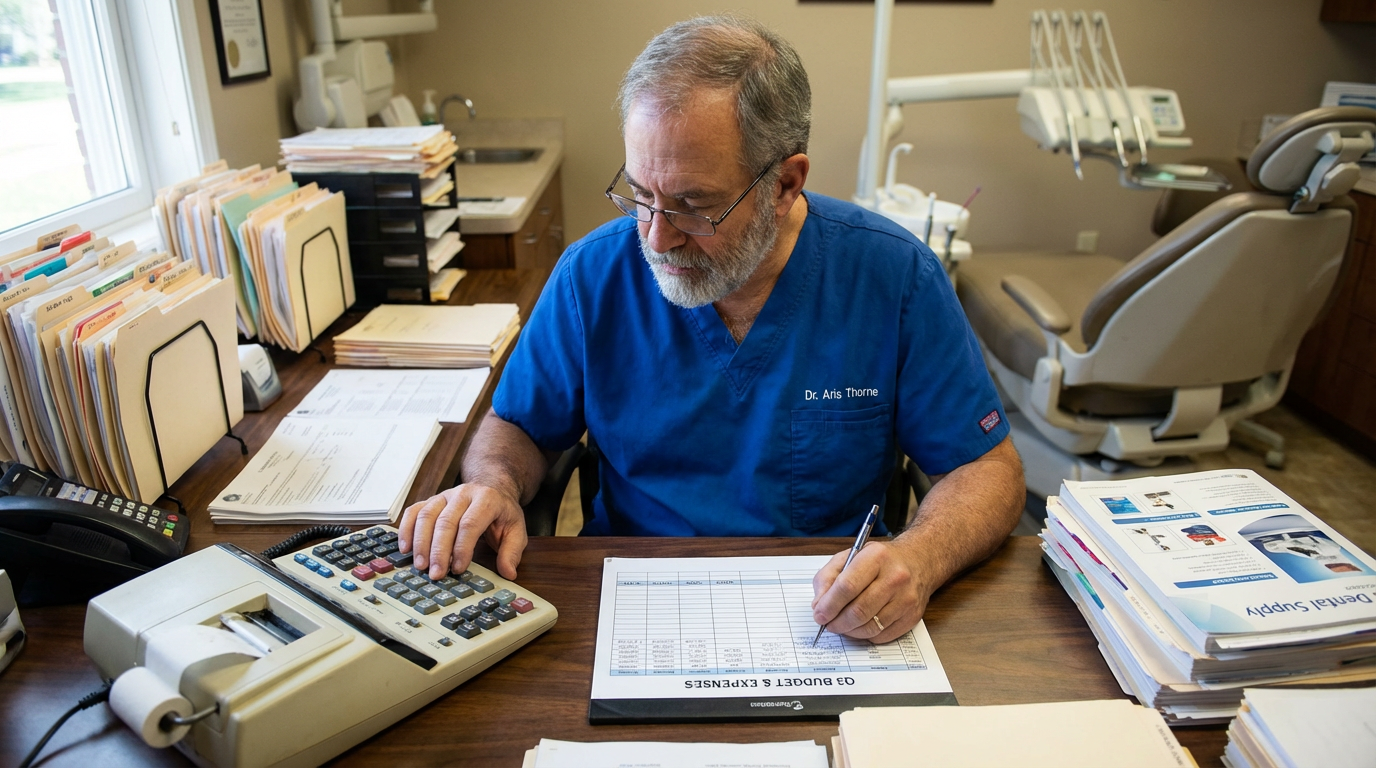
        The Cost of Freedom: Budgeting Your NHS-to-Private Conversion in 2026

        The Cost of Freedom: Budgeting Your NHS-to-Private Conversion in 2026

        The letter is sitting on your desk. You have drafted it three times. It is your resignation letter to the NHS.

        You are tired of the treadmill. You are tired of the UDA targets. You want to take back control of your clinical freedom. But one massive fear stops you from sending that letter.

        "How will I replace the money?"

        It is the question that keeps practice owners awake at night. You have a guaranteed cheque coming in every month. Walking away from it feels like jumping off a cliff.

        But it is not a cliff. It is a calculation.

        The fear comes from the unknown. Once you break down the numbers, the “impossible” task of filling that financial gap becomes a clear, manageable business plan. The key is understanding how much marketing spend it takes to replace your NHS UDA contract value with private revenue.

        The £100,000 Question

        Let’s use a round number. Imagine you need to replace a gross NHS contract value of £100,000.

        In the NHS world, this might represent roughly 3,500 to 4,000 UDAs, depending on your rate. That is a lot of clinical hours. That is a lot of rushed check-ups and silver fillings.

        To replace £100,000 in the private sector, you do not need to work harder. You just need to work smarter.

        You have two main vehicles to generate this revenue:

        1. Membership Plans (The steady income).
        2. Pay-As-You-Go Treatments (The high-value boost).

        Most successful conversions use a mix of both. But the marketing cost for each is very different.

        The Membership Math: Buying Stability

        This is your safety net. If you want to replace your NHS UDA contract value with sleep-easy income, you need a membership plan.

        Let’s do the maths.

        • Average Plan Fee: £20 per month.

        • Annual Value: £240 per patient.

        • Goal: £100,000.

        You need roughly 417 patients on a plan to hit your target (£100,000 ÷ £240).

        That is it. You don’t need 3,000 patients. You need 417 loyal ones.

        The challenge is getting them to sign up. When you convert, you will naturally bring some NHS patients with you. Industry data suggests a conversion rate of 20-40% is typical for a well-communicated switch.

        If you have 2,000 NHS patients and you convert just 20%, you have 400 plan members immediately. You have almost hit your target on day one without spending a penny on external ads.

        However, if you are starting from zero or have a low conversion rate, you need to “buy” those patients through marketing.

        The Cost of Acquisition (CPA): To get a new patient to sign up for a plan via Facebook Ads or Google, it might cost you between £50 and £100 in marketing spend per person.

        • Target: 100 new plan patients.

        • Marketing Budget: £5,000 – £10,000.

        This sounds like a lot. But remember, the “Lifetime Value” of that patient is huge. They stay for years. That initial £50 spend generates thousands in fees over a decade.

        The Pay-As-You-Go Math: Buying Growth

        You can’t rely on plans alone. You need high-value treatments to boost your hourly rate.

        Let’s look at how marketing helps replace your NHS UDA contract value through cosmetic dentistry.

        To generate £100,000, you could do:

        • 25 Invisalign cases (at £4,000 each).

        • 35 Composite Bonding cases (at £3,000 each).

        • 40 Single Implants (at £2,500 each).

        This is where your marketing budget needs to be aggressive. You are competing with every other private clinic in town.

        The marketing math here is different.

        • Cost per Lead: £20 – £40 (Someone filling in a form).

        • Conversion Rate: 10% (1 in 10 leads becomes a patient).

        • Cost per Sale: £200 – £400.

        If you want to sell 25 Invisalign cases to make £100k, and it costs you £300 in marketing to “buy” one sale, your total marketing spend is £7,500.

        You spend £7,500 to make £100,000. That is a 13x return on investment.

        The "Churn" Buffer

        When you hand back your contract, you will lose patients. This is inevitable. Some people just want free dentistry.

        You need to budget for this “Churn.”

        Marketing acts as the buffer. It refills the bucket while the hole at the bottom leaks. You cannot wait until the chair is empty to start advertising.

        A smart practice owner sets aside a “Conversion War Chest.”

        • Pre-Conversion (Months 1-3): heavily market your brand values. “We are changing for the better.”

        • During Conversion (Months 4-6): Aggressive new patient offers for plans.

        • Post-Conversion (Month 6+): Shift focus to high-value cosmetic treatments.

        A general rule of thumb for a private practice is to spend 3-5% of your turnover on marketing. If you want to turn over £500,000, your annual marketing budget should be around £15,000 to £25,000.

        If you are trying to replace your NHS UDA contract value aggressively, you might need to push that to 7-10% in the first year to build momentum.

        Why "Word of Mouth" isn't Enough

        Many NHS dentists rely on word of mouth. “My patients love me,” they say.

        That is true. But when you ask them to pay £60 for an exam instead of £26.80, love is tested.

        You need fresh blood. You need patients who value service over subsidy.

        These patients are often already looking for private care. They are searching for “Private Dentist in [Town]” or “Emergency Appointment Today.” They aren’t looking for an NHS bargain.

        Marketing allows you to target these specific people. You can exclude audiences looking for “cheap” or “NHS” keywords in your Google Ads. This ensures your budget is only spent on people willing to pay your fees.

        The Hidden Cost of NOT Marketing

        The biggest risk isn’t overspending on ads. It is underspending.

        If you cut your ties with the NHS and don’t invest in your brand, you risk a slow decline. Your loyal patients will age. Some will move away. Without a steady stream of new private patients, your income will shrink.

        The cost of an empty chair is far higher than the cost of a Google Ad.

        If your daily target is £1,500 and you have a gap, you have lost that money forever. Spending £50 to fill that gap is simple business logic.

        Summary

        Replacing your NHS income is a math problem, not a magic trick.

        1. Calculate your gap (£100k, £200k, etc.).
        2. Determine your mix (how many plan patients vs. how many cosmetic cases).
        3. Allocate a budget (aim for 5-7% of target revenue in year one).
        4. Track your Cost Per Acquisition (know exactly what you pay to buy a patient).

        You are not just spending money on ads. You are buying your freedom. You are buying the right to work at your own pace, with the materials you want, for patients who appreciate you.

        That freedom is worth every penny of the marketing budget.

        If you need help calculating the exact spend required to replace your NHS UDA contract value and execute the campaign, we are here to handle the numbers and the strategy.

        Click here to book a strategy call with Dentify Digital.

        Read More
        bbf6555a-b687-41c8-8d10-af45f41812b2
        Trends & Future
        January 23, 2026by Alfie

        Why is everyone talking about ‘Personal Branding’ for dentists?

        Think about the last time you bought a high-ticket item. Did you buy it because of a faceless corporate logo? Or did you buy it because you trusted the person selling it?

        The UK dental market is shifting. The days of relying solely on your clinic’s sign are gone.

        A young patient in Manchester recently walked past three large, established clinics to visit a small squat practice. Why? She wasn’t looking for “a dentist.” She was looking for “Dr. Emily,” a specific associate she follows on Instagram. She knew Dr. Emily’s face. She knew her voice. She had seen her before-and-after cases.

        She felt like she knew her before she even stepped through the door.

        This is the power of the “Star Dentist.”

        The Old Way vs. The New Reality

        For decades, practice owners focused on the clinic brand. You spent money on a logo, a colour scheme, and a website that used stock photos of smiling models.

        That approach is losing power.

        Today, Personal Branding for dentists is the strongest marketing tool you have. Patients, especially Gen Z and Millennials, are skeptical of corporate messaging. They do not trust “The Happy Tooth Clinic.” They trust people.

        Social media has changed how we make choices. A study on social media impact found that nearly 30% of patients were influenced by social media to get aesthetic treatments. They look for connection, not just convenience.

        If your marketing hides your team behind a logo, you are invisible to this modern audience.

        Why "Star Dentists" Win High-Value Cases

        Trust is the currency of dentistry.

        When a patient sees a video of you explaining a composite bonding procedure, two things happen:

        1. Fear reduces. They see a calm, professional human being.
        2. Authority grows. You become the expert in their mind.

        This pre-appointment trust is powerful. It means that when they finally sit in your chair, they are already sold. They aren’t asking “Why is this so expensive?” They are asking “When can we start?”

        This is why Personal Branding for dentists is not vanity. It is a sales strategy. It shortens the journey from “stranger” to “loyal patient.”

        Why the PDF Job Description Fails

        Most practice owners upload a dry, text-heavy PDF to a job site. It usually lists hours, UDA rates, and a demand for a “hard worker.”

        This is boring. It tells the candidate nothing about what it feels like to work with you.

        Instead, you need a “Career Landing Page.” This is a specific page on your website dedicated solely to Associate Dentist recruitment. It should include;

        • Photos of the surgery and the staff room.
        • Details about the equipment (scanners, microscopes, software).
        • Information on mentorship and funding for courses.
        • A clear description of the practice culture.

        If you don’t have a digital scanner or a treatment coordinator, you are already behind. High-performing Associates want to know they will have the tools to do their best work.

        Video Testimonials: Show, Don't Just Tell

        Anyone can write “we have a friendly team” in an advert. But it means nothing in text.

        To really stand out, you need social proof. Record short video interviews with your current team. Ask them simple questions.

        • “Why do you like working here?”
        • “How does the principal support your clinical growth?”
        • “What is the social life like?”

        When a potential candidate sees a real dentist smiling and talking about how much they love the practice, it builds instant trust. It removes the fear that they are walking into a toxic environment.

        Video content stops the scroll. It captures attention in a way that text never will.

        Target Dentists, Not Patients

        This is where most practices waste their money.

        You might boost a post on your practice Facebook page saying “We Are Hiring.” But who follows your page? Your patients. Mrs. Jones from down the road doesn’t know any dentists.

        You need to run targeted ads that are shown only to dental professionals.

        Platforms like Facebook, Instagram, and LinkedIn allow you to be very specific. You can show your beautiful video ad to people who list “Dentist” as their job title and live within 20 miles of your practice.

        This puts your offer right in front of the people who need to see it, even if they aren’t actively looking for a job. This is often where an agency like Dentify Digital can step in to manage the technical side of ad targeting, ensuring your budget isn’t wasted on the wrong audience.

        The Cost of an Empty Chair

        Ignoring this problem is expensive.

        Let’s do the maths. An empty surgery can cost a practice anywhere from £1,500 to £2,000 a day in lost revenue. Over a month, that is tens of thousands of pounds.

        Compared to that loss, the cost of a proper marketing campaign to find the right person is tiny.

        Yet, many owners hesitate to spend money on recruitment marketing. They prefer to wait and hope. But hope is not a strategy. While you wait, your patients are waiting too. And eventually, they will go elsewhere.

        Fix Your Recruitment Funnel

        The goal is to make it as easy as possible for a dentist to express interest.

        Do not make them fill out a ten-page application form. Do not make them create a login.

        On your Career Landing Page, have a simple button: “Chat with the Principal.” Let them book a casual 15-minute call directly into your diary.

        This lowers the barrier. It feels less formal. It treats them like a peer, not a subordinate.

        Fix Your Recruitment Funnel

        The dental landscape has shifted. The shortage of associates is real, and the competition is fierce.

        If you want to fill your surgery, you must adapt.

        1. Stop relying on boring job boards.
        2. Start treating candidates like high-value clients.
        3. Build a Career Landing Page that sells your culture.
        4. Use video to build trust and show off your team.
        5. Run targeted ads to reach passive candidates.

        Your next superstar Associate is out there. They just don’t know you exist yet. You have to go out and find them with the same energy you use to find your patients.

        Ready to transform your Associate Dentist recruitment process and fill that empty chair?

        Click here to book a strategy call with Dentify Digital today.

        Read More

        ©2026-DENTIFY DIGITAL-

        ©2026-DENTIFY DIGITAL-©2026-DENTIFY DIGITAL-©2026-DENTIFY DIGITAL-©2026-DENTIFY DIGITAL-©2026-DENTIFY DIGITAL-
        ©2026-DENTIFY DIGITAL-©2026-DENTIFY DIGITAL-©2026-DENTIFY DIGITAL-©2026-DENTIFY DIGITAL-©2026-DENTIFY DIGITAL-

        address:  Chancellors House, 3 Brampton Lane, Hendon, England, NW4 4AB

        info@dentifydigital.com

        phone:        020 4634 6363

        About us

        FacebookInstagram

        [Copyright © 2026. DENTIFY DIGITAL]

        [cookies policy]

        [Privacy policy]

        [Terms of Use]