logotype
  • HOME
  • SERVICES
    • WEB DESIGN
    • DIGITAL MARKETING
    • BRANDING
    • SEO
    • PHOTOGRAPHY
    • REPUTATION MANAGEMENT
  • BLOG
  • OUR WORK
  • RESOURCES
  • CONTACT US
    Contact us

    We are Here:

    Chancellors House, 3 Brampton Lane, Hendon, England, NW4 4AB

    Send mail:

    info@dentifydigital.com

    Call Us:

    020 4634 6363
    Facebook-fLinkedin-inInstagram
    Get in Touch

    Your email address will not be published. Required fields are marked *

    SEARCH
    logotype
    logotype
    • HOME
    • SERVICES
      • WEB DESIGN
      • DIGITAL MARKETING
      • BRANDING
      • SEO
      • PHOTOGRAPHY
      • REPUTATION MANAGEMENT
    • BLOG
    • OUR WORK
    • RESOURCES
    • CONTACT US
      Contact us

      We are Here:

      Chancellors House, 3 Brampton Lane, Hendon, England, NW4 4AB

      Send mail:

      info@dentifydigital.com

      Call Us:

      020 4634 6363
      Facebook-fLinkedin-inInstagram
      Get in Touch

      Your email address will not be published. Required fields are marked *

      SEARCH
      logotype
      • HOME
      • SERVICES
        • WEB DESIGN
        • DIGITAL MARKETING
        • BRANDING
        • SEO
        • PHOTOGRAPHY
        • REPUTATION MANAGEMENT
      • BLOG
      • OUR WORK
      • RESOURCES
      • CONTACT US
        Contact us

        We are Here:

        Chancellors House, 3 Brampton Lane, Hendon, England, NW4 4AB

        Send mail:

        info@dentifydigital.com

        Call Us:

        020 4634 6363
        Facebook-fLinkedin-inInstagram
        Get in Touch

        Your email address will not be published. Required fields are marked *

        March 2026
        Home2026March
        Dentist with patient
        Strategy & Growth
        March 31, 2026by Alfie

        How do I convert NHS patients to Private plans without upsetting them?

        Handing back an NHS contract is one of the most stressful moments in a principal dentist’s career. The fear isn’t just financial; it is deeply personal. You have looked after these families for years. You do not want to be seen as the “greedy dentist” who is turning their back on the local community.

        The secret to a successful, tear-free transition lies entirely in your internal marketing.

        Converting patients is not about “selling” them a dental plan. It is about communicating a change in the value of the care you provide. If the first time a patient hears about your switch is a cold, formal letter landing on their doormat, they will be upset. If they have been part of a carefully crafted, benefits-led conversation for months, they will be prepared—and often excited.

        1. Shift the Language: Features vs. Benefits

        Most dentists explain the move to private practice as a business necessity. They talk about UDA values, NHS red tape, and overheads.

        Here is the harsh truth: patients do not care about your overheads. They care about their own experience. You must flip the narrative to focus entirely on the benefits to the patient.

        2. The Power of Waiting Room Marketing

        Your waiting room is a captive marketing environment. Use it to plant the seeds of conversion long before the official announcement is mailed out.

        Digital Screens: Instead of showing BBC News or the weather, run “Life at the Practice” loops. Highlight your new 3D scanner, show a “Day in the Life” of your hygienist, and subtly introduce the concept of membership plans.

        Physical Touchpoints: Place high-quality, beautifully designed brochures on the side tables that explain the perks of your private plans. Let patients pick them up and start asking questions organically.

        3. The "Soft Launch" Email Newsletter

        Do not let your official “Notice of Conversion” letter be the first communication they receive from you this year.

        Start a monthly email newsletter three to six months before you plan to hand back the contract. Use it to educate and elevate your brand:

        Month 1: Share an article on “Why we invested in digital scanning” (highlighting modern care).

        Month 2: Discuss the vital link between regular hygiene visits and heart health (hinting at why plan-based preventive care is superior).

        Month 3: Introduce the team and their recent post-graduate qualifications.

        By the time the conversion letter arrives, the patient already perceives your practice as a high-end centre of excellence. The transition feels like a natural upgrade, making the price increase feel justified.

        4. Training the "Front-of-House" Heroes

        Your receptionists are the ones who will take the brunt of the upset phone calls. They need a script, but more importantly, they need conviction.

        If a receptionist says, “I’m so sorry, we’ve had to go private,” they sound guilty.
        If they say, “We have transitioned to a private-only model so we can guarantee same-day emergency appointments and longer check-ups for our members,” they sound like they are offering an exclusive, premium service.

        Run a workshop for your team. Role-play the difficult questions. Ensure everyone knows the “Why” behind the move so they can explain it with absolute confidence.

        5. Focus on the "Safety Net"

        The number one reason patients stay with the NHS is security. They fear that if they leave the system, they will be abandoned when they are in excruciating pain on a Friday afternoon.

        When marketing your private plans, lead heavily with the “Safety Net” messaging:

        “Guaranteed access to your registered dentist.”

        “Priority, same-day emergency slots.”

        “Total peace of mind that your family’s dental health is managed.”

        Summary

        You will lose some patients during an NHS conversion. That is an inevitable part of the math. But you are looking to retain the patients who value their relationship with you more than the subsidy of the NHS.

        • Start early: Use newsletters to build value months in advance.
        • Focus on benefits: Sell them more time, better tech, and priority access.
        • Optimise your space: Let your waiting room do the passive selling.
        • Empower your team: Give your front desk the scripts to handle objections with pride, not apologies.

        Conversion is not a rejection of your NHS patients; it is an invitation to a higher standard of care.

        If you are planning an NHS-to-Private move in the near future, we can help you draft the letters, design the brochures, and build the internal digital strategy to make it seamless.

        Read More
        Dentist tiktok
        Trends & Future
        March 24, 2026by Alfie

        Do I need a TikTok account for my dental practice?

        If you spent any time on social media over the last year, you’ve seen them: the “Turkey Teeth” warnings, the satisfying “reveal” videos of composite bonding, and dental nurses doing coordinated dances in the sterilisation room.

        TikTok has moved from a niche app for teenagers to a powerhouse that influences healthcare decisions. But for a busy practice owner, it poses a difficult question: Is this a vital business tool or a massive time-waster?

        The answer depends entirely on what you are trying to sell and who you are trying to treat.

        The "Composite Bonding" Boom

        TikTok is responsible for the single biggest surge in cosmetic dentistry demand in a generation. The platform’s algorithm is a “discovery engine.” Unlike Instagram, where people mostly see accounts they already follow, TikTok pushes your content to strangers based on their interests.

        If a 22-year-old in your city watches one video about “smile makeovers,” TikTok will start showing them more. If you are the local dentist appearing on their feed, you become the instant authority.

        TikTok is perfect for:

        • Invisalign and clear aligners.
        • Composite bonding and edge bonding.
        • Professional teeth whitening.
        • Boutique “experience-led” dentistry.

        The Demographic Mismatch

        Before you start filming, you must look at your business goals.

        TikTok’s primary demographic still skews younger. According to 2026 data, the largest user blocks are Gen Z and Millennials. If your goal is to grow your Implant or All-on-4 department, TikTok might not be the most efficient use of your budget.

        Patients seeking dental implants (typically aged 55+) are far more likely to be found on Facebook or searching via Google. Spending four hours a week making TikTok transitions to reach an audience that doesn’t have missing teeth is a poor “Return on Effort.”

        The "Humanity" Factor

        One area where TikTok wins for every practice—regardless of age—is humanising the brand.

        Modern patients are terrified of the “scary dentist.” TikTok allows you to show the personality behind the mask. Seeing a dentist laugh, explain a procedure simply, or introduce the team removes the “clinical barrier.” Even an older patient might find your practice through a Google search but then check your TikTok to see if you seem “nice.”

        The Content Trap: Dances vs. Education

        Many dentists avoid TikTok because they don’t want to dance. Good news: You don’t have to.

        In fact, “educational entertainment” (Edu-tain-ment) often performs better for healthcare professionals.

        • Reaction videos: Reacting to “DIY whitening” hacks (and explaining why they are dangerous).
        • Behind the scenes: Showing how a 3D scanner works.
        • The “Reveal”: The classic before-and-after, focusing on the patient’s emotional reaction.

        Summary: Should You Join?

        YES, if: You want to grow your cosmetic, bonding, or ortho list and have a team member who is enthusiastic about filming.

        NO, if: You are a strictly referral-based specialist or your focus is exclusively on geriatric or complex restorative dentistry.

        If you decide to join, remember that consistency is more important than production value. A raw, honest video filmed on an iPhone often gets more views than a polished corporate film.

        Read More
        Dentist holding up cash
        Budget & ROI
        March 17, 2026by Alfie

        What is a ‘good’ Cost-Per-Lead (CPL) for Dental Implants in the UK right now?

        Are You Overpaying for Implant Leads? The 2026 Benchmarks

        If you run Google or Facebook ads, you likely check your dashboard every morning. You see a number labeled CPL (Cost-Per-Lead).

        One day it is £15. You feel like a genius. The next day it jumps to £60. You feel like you are being robbed. But here is the hard truth: that number, on its own, is almost meaningless.

        In the UK dental market, not all leads are equal. A “cheap” lead can often be the most expensive mistake your practice makes.

        So, what is a “good” CPL for dental implants in 2026? To answer that, we have to look past the clicks and focus on the quality of the person behind the screen.

        The 2026 UK Benchmarks

        Based on current data from high-performing dental campaigns, we can divide leads into two distinct categories.

        The Raw Enquiry (£25 – £60)
        This is someone who clicked an ad and typed their name and email into a form.

        The Reality

         Many of these people are “tyre kickers.” They might not have the money. They might live 100 miles away. They might not even remember filling in the form.

        The Trap

        If your CPL is this low, your reception team will spend all day chasing people who don’t answer the phone. This wastes staff wages and creates “lead fatigue.”

        The Qualified Consult (£150 – £250)

        This is a “high-intent” lead. They haven’t just filled in a form; they have answered a pre-qualification survey. They have confirmed they have missing teeth, they understand the rough costs, and they have booked a specific time for a discovery call.

        The Reality

        The CPL is much higher, but the conversion rate is 5x better.

        The Value

        You are paying for a person who is ready to buy, not just curious.

        Why "Cheap Leads" Destroy Your ROI

        Many agencies promise “Implants leads for £10.” This is a siren song for practice owners.

        If you get 100 leads at £10 each, you spend £1,000. If 98 of them are poor quality and you only sell one implant (£2,500), your Return on Investment (ROI) is 2.5x.

        If you get 10 “Qualified Consults” at £100 each, you still spend £1,000. But if 4 of those people move forward with treatment (£10,000), your ROI is 10x.

        Cheap leads attract people looking for the lowest price. High-quality Personal Branding for dentists attracts people looking for the best expert.

        The Cost of a "No-Show"

        When calculating your true CPL, you must include the cost of your surgery time.

        If a “cheap” lead books a free consultation and doesn’t show up, you haven’t just lost the ad spend. You have lost the £200+ per hour it costs to run your surgery.

        This is why we recommend adding “friction” to your marketing funnel. Ask more questions. Require a refundable deposit for the consultation. This drives your CPL up, but it drives your Cost-Per-Sale down.

        Summary: What Should You Aim For?

        A “good” CPL is one that results in a profitable treatment.

        1. Emergency Leads: Aim for £40–£60. These are fast and low-friction.
        2. Implant Leads: Expect to pay £150+ for a qualified, high-intent lead in 2026.
        3. Focus on ROI: Stop asking “How much per lead?” and start asking “How much to buy a £10,000 treatment plan?”

        If your current marketing is delivering quantity but not quality, your team is likely burnt out from making useless phone calls. We can help you build a funnel that filters for the best patients.

        Click here to book a strategy call with Dentify Digital.

        Read More
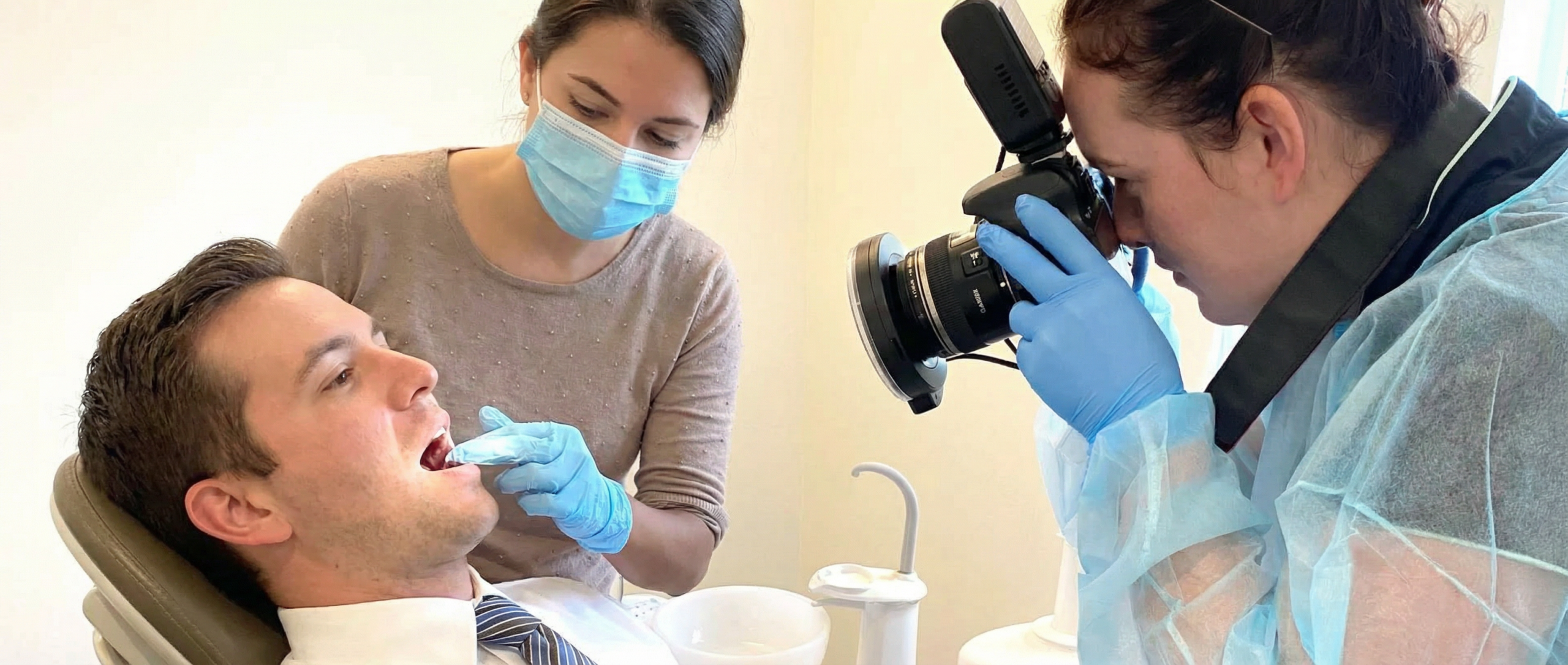
        Dentist photo
        Compliance & Regulations
        March 10, 2026by Alfie

        Can I use before-and-after photos of my patients on Instagram?

        You just finished a life-changing case. The composite bonding is seamless. The patient is crying with joy. You take a quick photo of the result on your phone. You want to post it to Instagram immediately to show your followers what you can do.

        Before you hit “Share,” you need to pause.

        In the UK, a patient’s smile is more than just a marketing asset. It is sensitive personal data. Sharing clinical images online involves a complex intersection of GDC standards, GDPR laws, and patient confidentiality.

        If you get it wrong, you aren’t just looking at an Instagram community strike. You are looking at a data breach that could lead to heavy fines or professional misconduct charges.

        The GDC Stance on Clinical Photos

        The General Dental Council is very clear about patient dignity and privacy. Standard 4.2 of the Standards for the Dental Team states that you must protect the confidentiality of patients’ information.

        This applies even if the patient is not identifiable by their face. A unique set of teeth, a specific diastema, or a distinctive tattoo near the mouth can all count as “identifiable data.”

        To remain compliant, you must:

        1. Ensure anonymity: Crop photos tightly to the mouth unless showing the full face is clinically necessary for the post.
        2. Remove metadata: Ensure the photo file doesn’t contain the patient’s name or record number in the “properties” section.
        3. Maintain professionalism: Avoid “joke” captions or anything that could be seen as mocking a patient’s “before” state.

        The GDPR Consent Minefield

        Under the General Data Protection Regulation (GDPR), “implied consent” does not exist for marketing.

        Just because a patient said “Yeah, no worries!” when you took the photo does not mean you have the legal right to post it on social media. You must have explicit, informed, and written consent.

        This consent must be specific. A general “Consent for Treatment” form is not enough. You need a dedicated “Social Media Consent Form” that explains:

        1. Where the photo will be used (Instagram, Facebook, Website).
        2. Who will see it (the general public).
        3. The right to withdraw: The patient must know they can ask you to delete the photo at any time.

        Link to GDC Guidance on Patient Consent

        Why "Verbal Permission" Is a Risk

        Imagine a patient loves their new teeth in the surgery. They say you can post the photo. Two months later, they have a falling out with their partner and decide they want to “scrub” their online presence. They see their teeth on your page and complain.

        If you don’t have a signed paper or digital form, it is your word against theirs. The Information Commissioner’s Office (ICO) will always side with the patient.

        Personal Branding for dentists relies on trust. Breaking that trust by ignoring privacy laws is a fast way to damage your reputation.

        Best Practices for Your "Before-and-After" Workflow

        To protect your practice, follow this 4-step process for every case:

        1. The Specific Form: Use a digital consent tool (like an iPad app) that links the signature directly to the patient’s clinical notes.
        2. The “Cooling Off” Period: Some dentists wait 24 hours before posting. This ensures the patient didn’t just agree because they felt pressured in the chair.
        3. Anonymise by Default: Use black bars over eyes or crop to the lips. This reduces the risk of “jigsaw identification.”
        4. Watermark Your Work: This is for your protection. It prevents other practices from “stealing” your results and claiming them as their own.

        The Power of the "Tag"

        If a patient is so happy that they want to be tagged, let them tag you first.

        If you tag a patient in a clinical photo, you are publicly linking their identity to a medical procedure. This is a high-level privacy risk. Instead, ask the patient: “If you’d like to share this on your stories, please tag us and we will repost it!”

        This shifts the “publishing” responsibility to the patient, which is much safer for you.

        Summary

        Before-and-after photos are the lifeblood of dental marketing, but they must be handled with care.

        • Never post without a signed, specific consent form.
        • Always aim for anonymity where possible.
        • Remove any identifying data from the image files.
        • Respect the patient’s right to change their mind and withdraw consent.

        Staying compliant doesn’t have to be a headache. If you need a template for a GDPR-compliant social media consent form, we can provide one for your team.

        Click here to book a strategy call with Dentify Digital.

        Read More
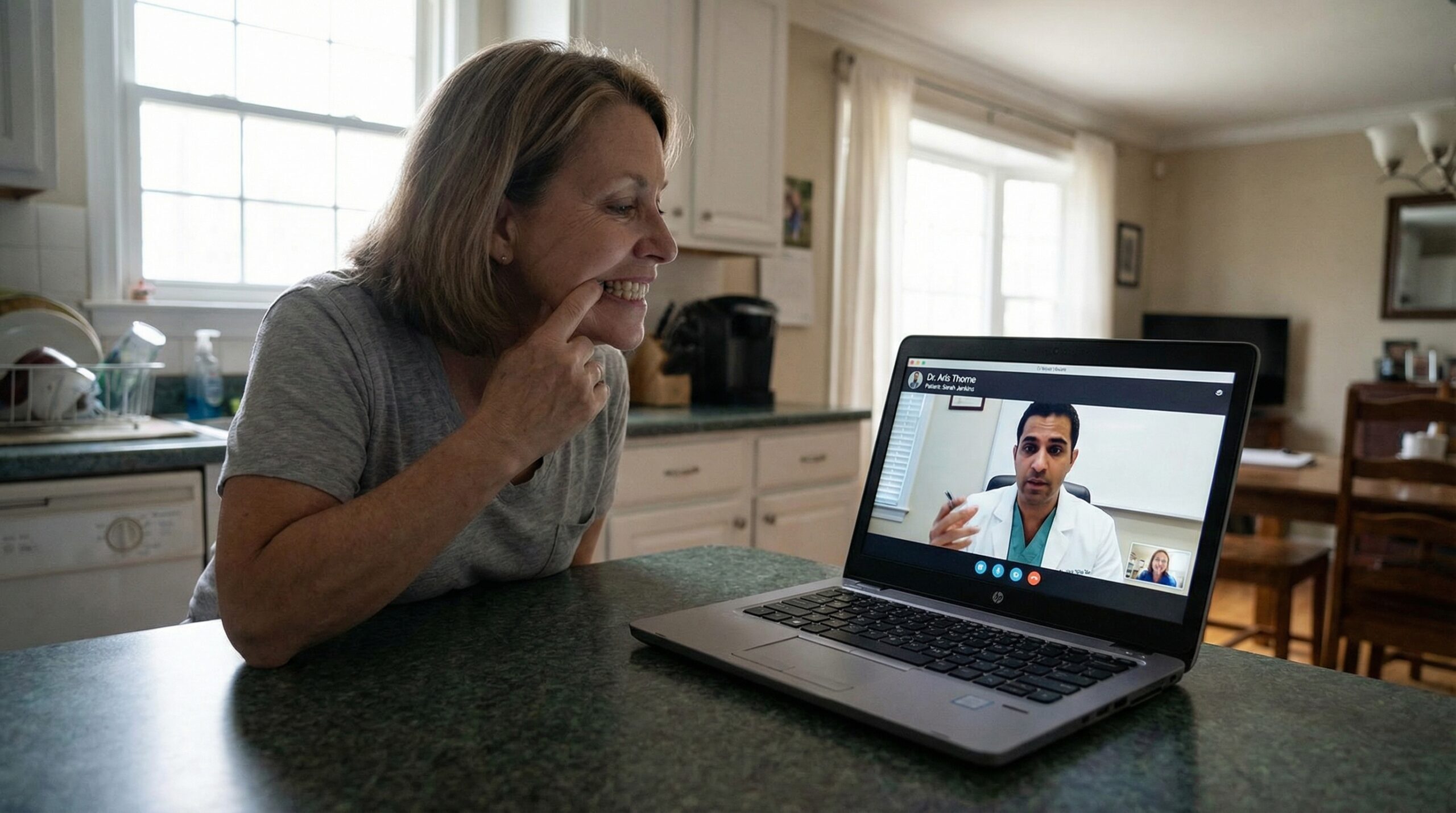
        virtual consult
        Trends & Future
        March 3, 2026by Alfie

        Virtual Consultations: A Flash in the Pan or the New Normal?

        During the pandemic, “Video Triage” was a survival tool. It was the only way to see if a patient’s swelling was a minor annoyance or a life-threatening abscess.

        But as we move through 2026, video triage has evolved. It is no longer an emergency fallback; it is one of the most powerful low-barrier-to-entry marketing tools in a private dentist’s arsenal.

        If you aren’t offering virtual “Discovery Calls” or “Smile Assessments,” you are missing a massive opportunity to pre-qualify patients before they ever step foot in your practice.

        What Exactly is Video Triage?

        In a dental marketing context, video triage (or teledentistry) is a 10–15 minute synchronous video call between a clinician (or a highly trained Treatment Coordinator) and a prospective patient.

        It serves three main purposes:

        1. Clinical Screening: Determining the urgency of an issue or the suitability for a specific treatment (like Invisalign or Implants).
        2. Anxiety Reduction: Letting nervous patients meet you from the safety of their own sofa.
        3. Sales Qualification: Ensuring the patient understands the rough costs and timelines before you block out an hour of expensive surgery time.

        The "Anxiety Buffer": Meeting Them on Their Turf

        For many people, the dental practice is a place of smells, sounds, and “the chair.” This creates a psychological barrier.

        Video triage removes the “clinical” environment. When a patient speaks to you via a screen from their kitchen table, their heart rate is lower. They feel more in control.

        By building rapport virtually, you are “pre-selling” the trust. By the time they arrive for their physical exam, the hardest part—the first introduction—is already done. They aren’t coming to see “The Dentist”; they are coming to see you, someone they’ve already chatted with.

        The 2026 Marketing Workflow

        In 2026, the most successful private practices use a “Virtual First” funnel for cosmetic enquiries:

        The Ad: A Facebook ad for “Dental Implants.”

        The CTA: Instead of “Book a £150 Consultation,” the call-to-action is “Book a Free 15-Minute Video Discovery Call.”

        The Call: You (or your TCO) look at their smile on screen. You explain the process, give a “starting from” price, and answer their biggest fears.

        The Result: You only book the physical consultation for patients who are motivated, informed, and financially ready.

        This protects your “Golden Hours.” Why spend 30 minutes in the surgery explaining to someone that they aren’t a candidate for bonding when you could have done that in 5 minutes over Zoom?

        Technical & Regulatory Guardrails

        While video triage is a marketing powerhouse, you must stay within the GDC and data protection lines:

        Prescription Only Medicines (POMs): You cannot use a video call to “prescribe” Botox or even certain high-strength whitening without a face-to-face physical assessment first.

        The “Advice vs. Diagnosis” Distinction: You must be clear that a video call is a consultation or screening, not a definitive diagnosis. You cannot see everything on a webcam that you can see with a probe and an X-ray.

        Platform Security: Do not use FaceTime or WhatsApp Video. They are not built for clinical data. Use a GDPR-compliant, encrypted platform like Dentally, Software of Excellence (SOE), or dedicated tools like Chairsyde or DenGro.

        Should You Charge?

        This is a debated topic.

        The Free Model: Acts as a “Lead Magnet.” It gets the maximum number of people into your funnel.

        The Paid Model (£25–£50): Acts as a filter. It ensures only serious patients book.

        Our Advice: Offer it for free for high-value cosmetic treatments (Invisalign, Implants) where the “Lifetime Value” of the patient is high. Charge a small refundable deposit for general emergency triage to prevent “no-shows.”

        Summary

        Video triage is the bridge between a “click” on your website and a “yes” in your treatment room.

        Lower the barrier: Use free virtual calls to attract nervous or “just looking” patients.

        Pre-qualify: Stop wasting surgery time on patients who aren’t ready for the investment.

        Humanise: Let them see your face and hear your voice before they smell the clove oil.

        Stay Secure: Use only encrypted, dental-specific platforms.

        The “New Normal” isn’t about replacing face-to-face dentistry; it’s about making sure that when you are face-to-face, it’s for the right reasons.

        Read More

        ©2026-DENTIFY DIGITAL-

        ©2026-DENTIFY DIGITAL-©2026-DENTIFY DIGITAL-©2026-DENTIFY DIGITAL-©2026-DENTIFY DIGITAL-©2026-DENTIFY DIGITAL-
        ©2026-DENTIFY DIGITAL-©2026-DENTIFY DIGITAL-©2026-DENTIFY DIGITAL-©2026-DENTIFY DIGITAL-©2026-DENTIFY DIGITAL-

        address:  Chancellors House, 3 Brampton Lane, Hendon, England, NW4 4AB

        info@dentifydigital.com

        phone:        020 4634 6363

        About us

        FacebookInstagram

        [Copyright © 2026. DENTIFY DIGITAL]

        [cookies policy]

        [Privacy policy]

        [Terms of Use]