logotype
  • HOME
  • SERVICES
    • WEB DESIGN
    • DIGITAL MARKETING
    • BRANDING
    • SEO
    • PHOTOGRAPHY
    • REPUTATION MANAGEMENT
  • BLOG
  • OUR WORK
  • RESOURCES
  • CONTACT US
    Contact us

    We are Here:

    Chancellors House, 3 Brampton Lane, Hendon, England, NW4 4AB

    Send mail:

    info@dentifydigital.com

    Call Us:

    020 4634 6363
    Facebook-fLinkedin-inInstagram
    Get in Touch

    Your email address will not be published. Required fields are marked *

    SEARCH
    logotype
    logotype
    • HOME
    • SERVICES
      • WEB DESIGN
      • DIGITAL MARKETING
      • BRANDING
      • SEO
      • PHOTOGRAPHY
      • REPUTATION MANAGEMENT
    • BLOG
    • OUR WORK
    • RESOURCES
    • CONTACT US
      Contact us

      We are Here:

      Chancellors House, 3 Brampton Lane, Hendon, England, NW4 4AB

      Send mail:

      info@dentifydigital.com

      Call Us:

      020 4634 6363
      Facebook-fLinkedin-inInstagram
      Get in Touch

      Your email address will not be published. Required fields are marked *

      SEARCH
      logotype
      • HOME
      • SERVICES
        • WEB DESIGN
        • DIGITAL MARKETING
        • BRANDING
        • SEO
        • PHOTOGRAPHY
        • REPUTATION MANAGEMENT
      • BLOG
      • OUR WORK
      • RESOURCES
      • CONTACT US
        Contact us

        We are Here:

        Chancellors House, 3 Brampton Lane, Hendon, England, NW4 4AB

        Send mail:

        info@dentifydigital.com

        Call Us:

        020 4634 6363
        Facebook-fLinkedin-inInstagram
        Get in Touch

        Your email address will not be published. Required fields are marked *

        April 2026
        Home2026April
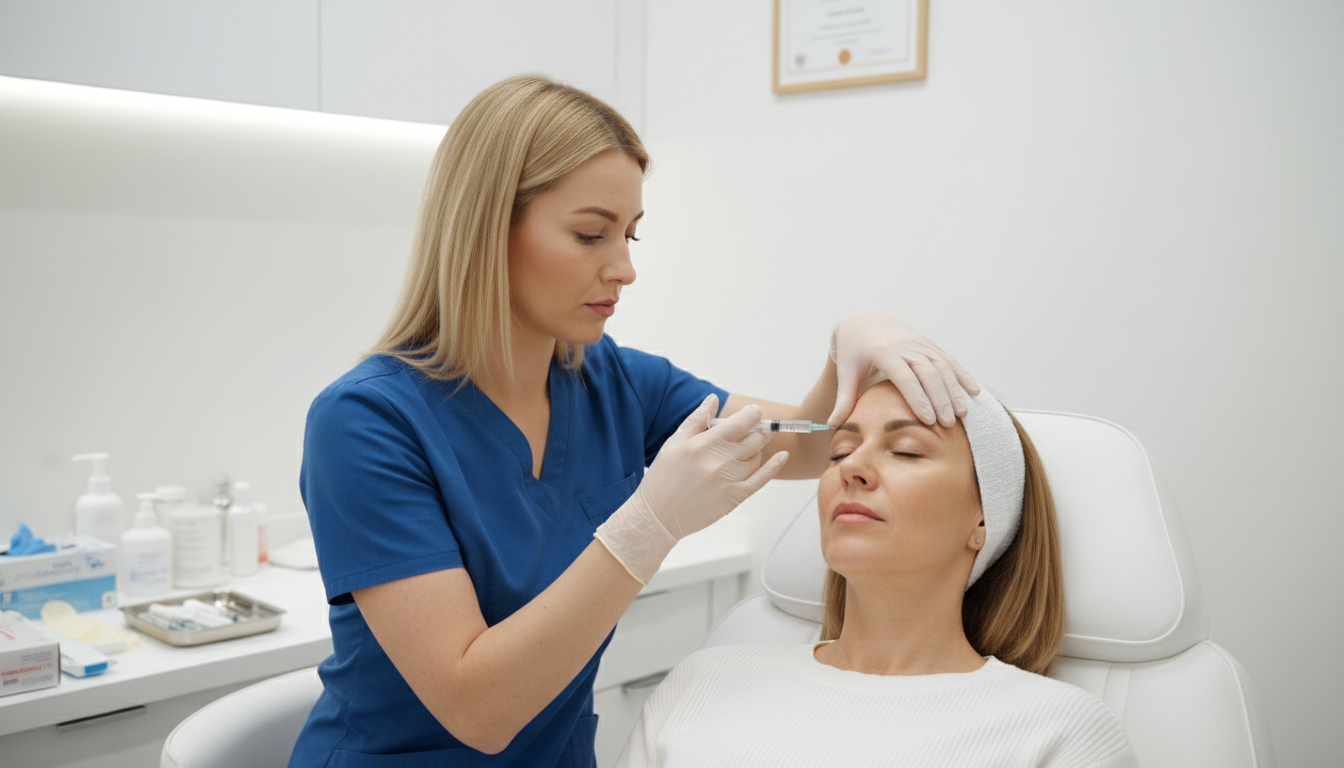
        Aesthetic Clinic with Patient
        Strategy & Growth
        April 24, 2026by Alfie

        Should Your Aesthetics Clinic Have Its Own Website?

        You have invested in the training. You have the clinical skills to deliver incredible lip fillers, anti-wrinkle injections, and skin rejuvenation. Now, it is time to market your new services.

        You look at your current dental practice website. It features photos of drills, talk of root canals, and a blue-and-white clinical colour scheme. You immediately think: “I need a completely new website and brand for my facial aesthetics. People want a spa, not a surgery.”

        It is a very natural conclusion, but from a digital marketing perspective, it is often a very expensive trap.

        Deciding whether to separate your facial aesthetics brand from your dental brand is one of the most critical structural decisions you will make. Let’s break down the reality of what this split actually means for your business.

        The Pros: Why Splitting Feels Right

        There are genuine, psychological reasons why dentists want to separate their aesthetics brand.

        The Premium “Spa” Vibe: Aesthetics patients are buying luxury, confidence, and self-care. They want soft lighting, warm colours, and elegance. Dental websites, by necessity, lean toward clinical safety and hygiene.

        Targeted Messaging: A separate website allows you to speak exclusively to an aesthetics audience without confusing the messaging with “family check-ups” or “emergency extractions.”

        Avoiding Dental Anxiety: Some patients are genuinely terrified of the dentist. Removing the word “Dental” from your aesthetics URL can lower the psychological barrier to entry for these phobic patients.

        The Cons: The Harsh Reality of Digital Marketing

        While the branding argument is strong, the marketing and SEO (Search Engine Optimisation) reality of splitting your brand is brutal.

        1. Splitting Your SEO Authority

        Google ranks websites based on “Domain Authority”—a measure of trust built up over years of traffic, good content, and local backlinks. If your dental practice has been at the same URL for 10 years, it carries immense weight in your local area.

        If you build a new page for “Lip Fillers in [Your Town]” on your existing dental website, it benefits from that decade of trust. It will likely rank on page one very quickly.

        If you buy a brand-new domain (e.g., TownAesthetics.co.uk), it starts with zero authority. You will spend months—and thousands of pounds—trying to convince Google that this new website deserves to rank above established local clinics.

        2. Doubling Your Overheads

        A separate brand is not just a separate website. It is a completely separate business entity to manage.

        Marketing AssetOne Combined BrandTwo Separate Brands
        Website Hosting & Maintenance1 fee2 fees
        Social Media Management1 Instagram / Facebook2 Instagrams / Facebooks
        Google Ads BudgetCombined pool of dataSplit budgets, slower AI learning
        Google Business Profile1 profile with 500+ reviews

        Do you have the time to post on two different Instagram accounts every day? Do you have the budget to pay an agency to run two completely separate SEO campaigns?

        3. Losing the "Cross-Sell"

        Your easiest, most profitable facial aesthetics leads are sitting in your waiting room right now.

        If a patient is on your dental website looking at Invisalign, and they see a beautifully designed tab for “Facial Aesthetics,” they are highly likely to click it. If that content lives on a completely different website, you break the user journey and lose the organic cross-sell.

        The "Hybrid" Solution

        You do not have to choose between a clinical dental site and a separate aesthetics brand. The most successful practices in 2026 use a Hybrid Strategy.

        Keep everything on your main dental domain to protect your SEO, but create a “website within a website” for aesthetics.

        1. Dedicated Navigation: Create a clear, separate menu tab for “Facial Aesthetics.”
        2. Visual Shift: When a user clicks into the aesthetics section, change the styling. Soften the colours, use lifestyle imagery instead of clinical photos, and adjust the tone of voice.
        3. Dedicated Landing Pages: If you run Facebook Ads for Botox, send that traffic directly to the beautiful aesthetics landing page, not your dental homepage. The patient never has to see the “root canal” information.

        Summary

        If you are a large corporate entity with a £10,000+ monthly marketing budget and the goal of opening a standalone med-spa down the street, separating the brand makes sense.

        However, if you are a principal dentist looking to add a profitable revenue stream to your existing clinical diary, keep it under one roof.

        • Protect your SEO: Leverage the domain authority your dental site already owns.
        • Consolidate your budget: Spend your money on driving traffic, not maintaining a second website.
        • Use design, not domains: Create a premium feel on the specific aesthetics pages without changing the URL.

        Read More
        Robot Receptionist
        Trends & Future
        April 17, 2026by Alfie

        Can AI actually answer my practice phone calls?

        Never Miss a New Patient: The Reality of AI Receptionists in 2026

        It is 2:00 AM on a Saturday. A prospective patient wakes up with a throbbing, unbearable toothache. Desperate, they search “emergency dentist near me” on Google and call the first result.

        It rings three times and goes to a standard voicemail: “You have reached Smith Dental. Our hours are 9 to 5. Please leave a message.”

        The patient hangs up immediately. They do not leave a message. They scroll down to the next practice on Google and call them instead. You just paid £5 for that Google Ads click, but your competitor is going to get the £300 emergency fee and the potential £3,000 implant treatment that follows.

        For decades, the “voicemail graveyard” has been an accepted cost of doing business. But in 2026, a new wave of Conversational AI has fundamentally changed how dental practices handle missed calls.

        Asking “Can AI actually answer my practice phone calls?” is no longer a futuristic concept. It is a reality that is already capturing lost revenue for early adopters.

        The Problem with the Old "Press 1" Systems

        When dentists hear “automated answering,” they usually think of traditional Interactive Voice Response (IVR) systems.

        “Press 1 for reception. Press 2 for billing. Press 3 if you are a robot.”

        These systems are frustrating. They create friction. High-value patients looking for cosmetic treatments do not want to navigate a phone maze. They want to speak to a human, or at the very least, they want their specific problem acknowledged immediately.

        Enter Conversational AI

        The AI receptionists of 2026 are not IVR systems. They are powered by Large Language Models (LLMs) that understand natural speech, context, and intent.

        When the phone rings, the AI answers. The patient speaks naturally.
        “Hi, my veneer just popped off and I’m panicking. Can someone see me tomorrow?”

        The AI listens, processes the request, and responds conversationally:

        “I am so sorry to hear that, I know that can be stressful. We do have emergency slots reserved for tomorrow. Let me just get your name and date of birth to check the diary.”

        Triaging the 2 AM Emergency

        The greatest superpower of an AI voice assistant is that it does not sleep, take lunch breaks, or call in sick.

        For a private practice, capturing out-of-hours emergencies is highly profitable. An AI receptionist can be programmed with specific triage pathways:

        Assess the urgency: The AI asks if there is severe swelling, bleeding, or difficulty breathing (directing to A&E if necessary).

        • Capture the lead: It takes the patient’s name, phone number, and a description of the problem.
        • Book the slot: Integrated with your practice management software, it can offer provisional emergency slots for the following morning.
        • Alert the team: It instantly texts or emails the practice manager with a summary of the call.

        When your reception team unlocks the doors at 8:30 AM, the diary is already populated with pre-triaged emergencies.

        Does It Sound Like a Robot?

        This is the biggest fear for practice owners. You have spent years building a brand based on empathy and premium care. You do not want a metallic “Dalek” voice answering your phones.

        The technology has crossed the uncanny valley. Modern AI agents feature:

        Natural pauses and breathing sounds.

        Localised accents (e.g., a natural-sounding British accent rather than a generic American Siri).

        Interruption handling: If the patient interrupts the AI to add a detail, the AI stops talking, listens, and adjusts its response.

        While a patient might eventually realise they are speaking to an incredibly smart digital assistant, the immediate relief of having their problem handled far outweighs the lack of a human heartbeat.

        The Daytime Wingman

        AI isn’t just for 2 AM. It is the ultimate pressure-release valve for your front desk during the “rush hours” of 8:30 AM and 5:00 PM.

        If your receptionist is explaining a £5,000 Invisalign treatment plan to a patient at the desk, they should not be distracted by a ringing phone. The AI acts as an overflow valve. It answers the call on the third ring, handles the simple query (like “What are your opening hours?” or “Can I reschedule my hygiene visit?”), and lets your human team focus on high-value, face-to-face interactions.

        Summary: Is It Worth the Investment?

        An AI voice assistant is not designed to replace your Treatment Coordinator or your lead receptionist. It is designed to replace your voicemail.

        • Stop the bleed: Capture high-intent patients who refuse to leave voicemails.
        • Pre-triage out of hours: Turn 2 AM panic into booked 9 AM appointments.
        • Protect your front desk: Reduce burnout by filtering out low-level admin calls during busy periods.
        • Increase ROI: If the AI saves just one implant or emergency lead a month, it pays for its software subscription ten times over.

        If your practice misses more than 10 calls a week, you are leaking revenue. AI is the easiest way to plug the hole.

        Click here to book a strategy call with Dentify Digital to see a live demo of a dental AI receptionist in action.

        Read More
        angry patient
        Compliance & Regulations
        April 10, 2026by Alfie

        How Do I Reply to a Negative Google Review Without Breaching Confidentiality?

        Your smartphone buzzes. It is an email notification from Google Business Profile. You open it and your heart rate immediately spikes.

        It is a 1-star review.

        The reviewer is furious. They claim you ruined their tooth, overcharged them, and had a terrible bedside manner. You pull up their file and see the truth: they arrived 20 minutes late, had rampant decay, and refused an X-ray.

        Your first instinct is to reply immediately. You want to defend your reputation, explain the clinical reality, and prove to the internet that you were in the right.

        Do not hit reply.

        In the UK, replying to a patient’s specific clinical complaint on a public forum is a direct breach of General Dental Council (GDC) standards and GDPR. If you confirm they are a patient and discuss their treatment, you have just publicly shared sensitive medical data.

        Winning an argument in the Google comments is not worth risking your registration. Here is how you handle the situation professionally, safely, and legally.

        The Golden Rule: You Are Replying for the Audience

        When you reply to a negative review, you are not actually talking to the angry reviewer. They have already made up their mind.

        You are replying for the hundreds of prospective patients who will read that review next month.

        When a new patient sees a 1-star review, they immediately look at how the practice owner handled it. If you sound defensive, angry, or petty, the patient will side with the reviewer. If you sound calm, professional, and empathetic, the patient will assume the reviewer is just a difficult person.

        Your only goal is to take the conversation offline while looking like the most reasonable person in the room.

        Template 1: The Standard Clinical Complaint

        Use this when a recognized patient complains about treatment, pain, or pricing. Notice how it does not confirm what treatment they had, or even definitively confirm they are a patient.

        “Hi [Name], we set a very high standard for patient care at our practice, and we are sorry to hear that your experience did not reflect this. Due to strict patient confidentiality and privacy laws, we cannot discuss specific clinical details or individual care on a public forum. We take all feedback seriously and would like to investigate this matter thoroughly. Please contact our Practice Manager directly at [Phone Number] or [Email Address] so we can resolve this with you privately.”

        Template 2: The "Fake" or Unrecognised Review

        Sometimes, you get a 1-star review from an account with no profile picture and a fake name. It could be a competitor, a disgruntled ex-employee, or a bot. You still need to reply to show future patients that you monitor your feedback.

        “Hi [Name], thank you for leaving feedback. We have checked our practice records and cannot find a patient matching your name or details. We pride ourselves on our high standard of care and take all complaints very seriously. If you have visited our clinic under a different name, please reach out to our management team at [Phone Number] so we can look into this immediately.”

        Template 3: The Administrative Complaint

        If the complaint is purely about waiting times, rude reception staff, or parking, you have slightly more leeway to apologize, but you must still keep it general.

        “Hi [Name], thank you for bringing this to our attention. We understand that your time is valuable, and we apologize if you experienced a delay during your visit. Our team works hard to keep appointments running on time, though occasional dental emergencies can cause unavoidable delays. We would love the opportunity to discuss your experience further. Please email us at [Email Address].”

        The "Never Do This" Checklist

        To keep yourself entirely safe from regulatory headaches, ensure your team follows these strict boundaries:

        • Never use their real name if they use a pseudonym. If “DentalHater99” leaves a review, do not reply with, “Hi John Smith.” You have just doxed them.
        • Never confirm the treatment. Do not say, “We are sorry your extraction was painful.” Say, “We are sorry to hear about your experience.”
        • Never argue clinical facts. Do not point out that they didn’t follow post-op instructions. Save that for the private phone call or the official written complaint response.
        • Never threaten legal action online. Replying with “Remove this or my lawyers will contact you” looks incredibly unprofessional to anyone reading your profile.

        Summary

        A 1-star review feels like a personal attack, but in the digital age, it is just a routine business obstacle.

        1. Pause: Step away from the keyboard for 24 hours. Let the emotion fade.
        2. Generalise: Never confirm patient status or clinical details.
        3. Acknowledge: Validate their frustration without admitting fault.
        4. Redirect: Provide a phone number and email to move the conversation to a private, compliant channel.

        By remaining polite and professional, you turn a negative review into a demonstration of your excellent customer service.

        Read More
        dentist with patient Invisalign
        Budget & ROI
        April 8, 2026by Alfie

        How much does a new Invisalign/Implant patient actually cost to acquire?

        If you ask a marketing agency, “How much does it cost to get a new Invisalign patient?” you will rarely get a straight answer. They will throw acronyms at you. They will talk about impressions, click-through rates, and algorithms.

        But as a practice owner, you only care about the bottom line. You are running a business, not a digital arts project. You need to know exactly how many pounds you have to put into the machine to get a £4,000 treatment plan out the other side.

        To figure this out, you must understand the critical difference between the two most important metrics in dental marketing: Cost Per Lead (CPL) and Cost Per Acquisition (CPA).

        Confusing the two is the fastest way to drain your marketing budget and frustrate your reception team.

        CPL vs. CPA: What is the Difference?

        Cost Per Lead (CPL): This is the cost to get someone’s contact information. They clicked your Facebook ad and submitted a form with their name, email, and phone number. They are a potential patient.

        Cost Per Acquisition (CPA): This is the cost to get a paying patient into the chair who actually accepts the treatment plan. They have handed over their credit card or signed the finance agreement. They are a real patient.

        Agencies love to sell you on a low CPL. It makes them look good. “Look, we got you 50 implant leads for just £20 each!”

        But if none of those 50 people actually show up to the practice or qualify for surgery, your CPA is £0, and you just wasted £1,000.

        The Math: Why the "Expensive" Lead is Cheaper

        Let’s look at two common scenarios for a practice trying to sell £3,500 Invisalign packages.

        Scenario A: The “Cheap Lead” Strategy
        You run a broad, generic ad offering a “Free Invisalign Consult.” The form is short. Anyone can click it.

        • CPL: £50.
        • Leads Generated: 20.
        • Total Ad Spend: £1,000.
        • The Reality: 15 of them don’t answer the phone. 3 book but don’t show up. 2 show up, but only 1 accepts treatment.

        Your True CPA: You spent £1,000 to get 1 patient. Your CPA is £1,000.

        Scenario B: The "High-Intent Lead" Strategy

        You run an ad that clearly states the starting price (£3,500) and requires the patient to fill out a 5-question pre-qualification survey before booking. You also charge a £30 refundable deposit to hold the consultation slot.

        • CPL: £150 (Because you added friction, fewer people fill it out, so each lead costs more to generate).
        • Leads Generated: 10.
        • Total Ad Spend: £1,500.
        • The Reality: Because they jumped through hoops and paid a deposit, 9 show up. They already know the price, so 3 of them accept treatment.
        • Your True CPA: You spent £1,500 to get 3 patients. Your CPA is £500.

        In Scenario B, the lead cost three times as much to generate (£150 vs £50). But the actual patient cost half as much to acquire (£500 vs £1,000).

        The Hidden Costs of Cheap Leads

        When you chase a low CPL, you aren’t just wasting ad spend. You are bleeding money internally.

        Reception Burnout: Your front desk is paid to manage the patients in front of them, not to act as an outbound call centre. Chasing cheap leads who don’t want to talk to you destroys team morale.

        Wasted Chair Time: If a “tyre kicker” actually makes it into the chair for a free 30-minute consult and then says, “Oh, I didn’t realise implants were more than £500,” you have just lost £150+ in hourly surgery overheads.

        The 2026 Benchmarks: What Should You Expect to Pay?

        The cost of advertising on Google and Meta (Facebook/Instagram) fluctuates, but in the UK market right now, here are realistic benchmarks for a well-optimised campaign:

        Invisalign/Clear Aligners:

        • Good CPL: £60 – £120
        • Target CPA: £300 – £600

        ROI: Spending £500 to make £3,500 is a fantastic return.

        Dental Implants (Single/Multiple):

        Good CPL: £100 – £250

        Target CPA: £500 – £900

        ROI: Implants are higher friction. But spending £800 to secure a £5,000+ treatment plan still yields excellent profitability.

        Note: These numbers assume your front-of-house team has excellent telephone conversion skills. If your reception team cannot sell a consultation, your CPA will skyrocket regardless of how good the ads are.

        Summary

        Stop looking at the cost of the click. Start looking at the cost of the chair.

        Understand the Metrics: CPL is a vanity metric. CPA is a business metric.

        Add Friction: Don’t be afraid to ask qualifying questions on your web forms. It filters out the time-wasters.

        Know Your Margins: If an implant brings in £2,000 profit, spending £600 to acquire that patient makes perfect business sense.

        Track Everything: Connect your ads to your practice management software so you know exactly which £150 lead turned into a £10,000 full-arch case.

        If you are tired of paying for leads that never answer the phone, it is time to shift your strategy from volume to value.

        Click here to book a strategy call with Dentify Digital.

        Read More
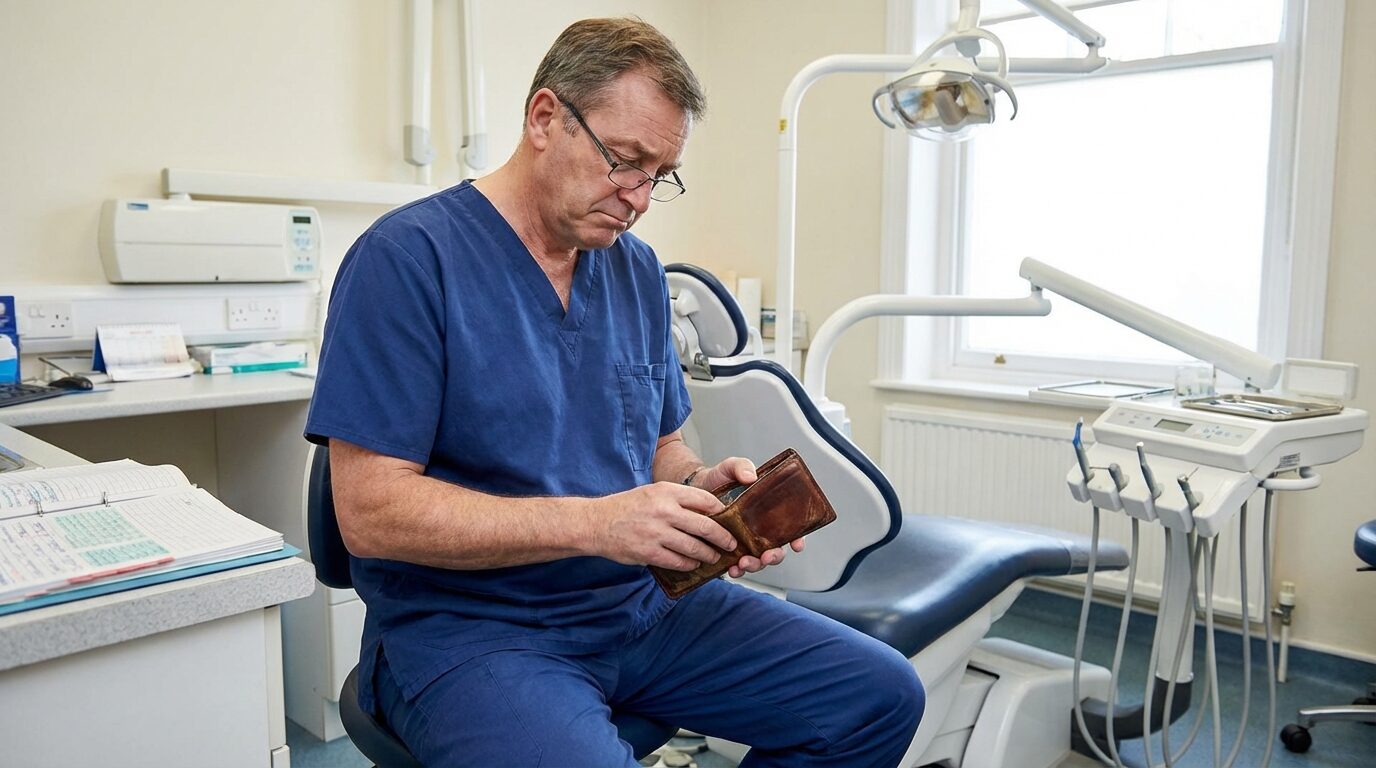
        Dentist looking in wallet
        Budget & ROI
        April 3, 2026by Alfie

        What is the average marketing budget for a private dental practice in the UK?

        Budgeting for Growth: How Much Should a UK Private Practice Spend on Marketing?

        Every practice owner eventually sits down with their accountant, looks at the profit and loss statement, and stares at the “Marketing” line item.

        You might be spending £500 a month. You might be spending £5,000 a month. Either way, the same questions keep you up at night: Am I spending too much? Am I spending enough? What is the clinic down the road spending?

        Asking “What is the average marketing budget?” is a bit like asking “How much does a house cost?” It depends entirely on whether you want a two-bedroom terrace or a six-bedroom mansion.

        In the 2026 UK dental market, your budget should not be a random number you pull out of thin air. It should be a strict percentage of your projected turnover, dictated by the phase of business you are in.

        The 3-7% Rule: Maintenance and Steady Growth

        If you have an established private dental practice with a healthy book of patients, strong local word-of-mouth, and a diary that is mostly full, you fall into this category.

        For steady, sustainable growth, the golden rule of business is to reinvest 3% to 7% of your gross annual turnover into marketing.

        • Turnover: £1,000,000
        • Annual Budget (5%): £50,000
        • Monthly Budget: ~£4,166

        What does this budget do? It acts as your defensive shield and your steady engine. It covers:

        • Paying a professional agency to manage your SEO so you stay at the top of Google.
        • Running consistent Google Ads to catch patients looking for high-value treatments like implants or Invisalign.
        • Maintaining a high-quality website and email newsletter software.
        • Replacing the natural “churn” of patients who move away or pass on.

        If you drop below 3%, you are coasting. Coasting feels great for a while, but eventually, friction slows you down, and hungrier competitors will overtake you.

        The 10-15% Rule: Aggressive Growth

        Sometimes, maintaining the status quo is not enough. You need to capture market share rapidly. This requires an aggressive growth budget of 10% to 15% of your projected turnover.

        You need to shift into this aggressive bracket if you are facing any of the following scenarios:

        • Opening a Squat Practice: You have zero patients and heavy finance to pay off. You need footfall immediately.
        • An NHS-to-Private Conversion: You are handing back your contract and need to rapidly acquire private fee-paying patients to fill the void.
        • Bringing on a New Associate: You just hired a specialist endodontist or implantologist. You cannot expect them to sit in an empty surgery. You need to buy them leads.
        • Expanding the Premises: You just added two new surgeries to your building.

        If your goal is to grow from £500k to £1m in turnover this year, you cannot get there using a 3% maintenance budget. You have to spend money to acquire that new market share.

        • Target Turnover: £1,000,000
        • Annual Budget (12%): £120,000
        • Monthly Budget: £10,000

        This sounds terrifying to many clinicians. But remember: marketing for high-ticket dentistry is not an expense; it is a mathematical equation. If you spend £10,000 to confidently acquire £80,000 worth of implant and orthodontic cases, that is a highly profitable machine.

        The Trap of the "Flat Rate" Budget

        The biggest mistake practice owners make is setting a flat budget and leaving it there for five years.

        “We spend £1,000 a month on marketing.”

        In 2021, £1,000 bought you a lot of clicks on Google. In 2026, the Cost-Per-Click (CPC) for terms like “Invisalign near me” has skyrocketed due to heavy competition. If your budget stays flat while inflation and competition rise, your actual reach shrinks every single month. Your budget must be a percentage of revenue so that it scales dynamically as your practice grows.

        How to Allocate the Funds

        Whether you are spending 5% or 15%, how you slice the pie matters. A healthy modern mix looks like this:

        • 50% on Direct Acquisition: Google Ads and Meta (Facebook/Instagram) Ads. This is your tap for immediate leads.
        • 30% on Asset Building: SEO, website improvements, and professional content creation (video/photography). This lowers your reliance on paid ads over time.
        • 20% on Internal/Retention: Email marketing software, referral reward programs, and waiting room digital displays.

        Summary

        Do not look at marketing as a drain on your profits. Look at it as the fuel for your business engine.

        Calculate your target turnover for the next 12 months.

        Assess your current phase. Are you maintaining (3-7%) or aggressively attacking the market (10-15%)?

        Set the percentage and stick to it, dividing the annual number by 12 for your monthly spend.

        Track your Return on Investment (ROI) to ensure that the fuel is actually making the car go faster.

        If you are unsure where your practice fits on this scale, or if you feel your current budget is being wasted on the wrong channels, we can help you audit your spend.

        Read More

        ©2026-DENTIFY DIGITAL-

        ©2026-DENTIFY DIGITAL-©2026-DENTIFY DIGITAL-©2026-DENTIFY DIGITAL-©2026-DENTIFY DIGITAL-©2026-DENTIFY DIGITAL-
        ©2026-DENTIFY DIGITAL-©2026-DENTIFY DIGITAL-©2026-DENTIFY DIGITAL-©2026-DENTIFY DIGITAL-©2026-DENTIFY DIGITAL-

        address:  Chancellors House, 3 Brampton Lane, Hendon, England, NW4 4AB

        info@dentifydigital.com

        phone:        020 4634 6363

        About us

        FacebookInstagram

        [Copyright © 2026. DENTIFY DIGITAL]

        [cookies policy]

        [Privacy policy]

        [Terms of Use]