
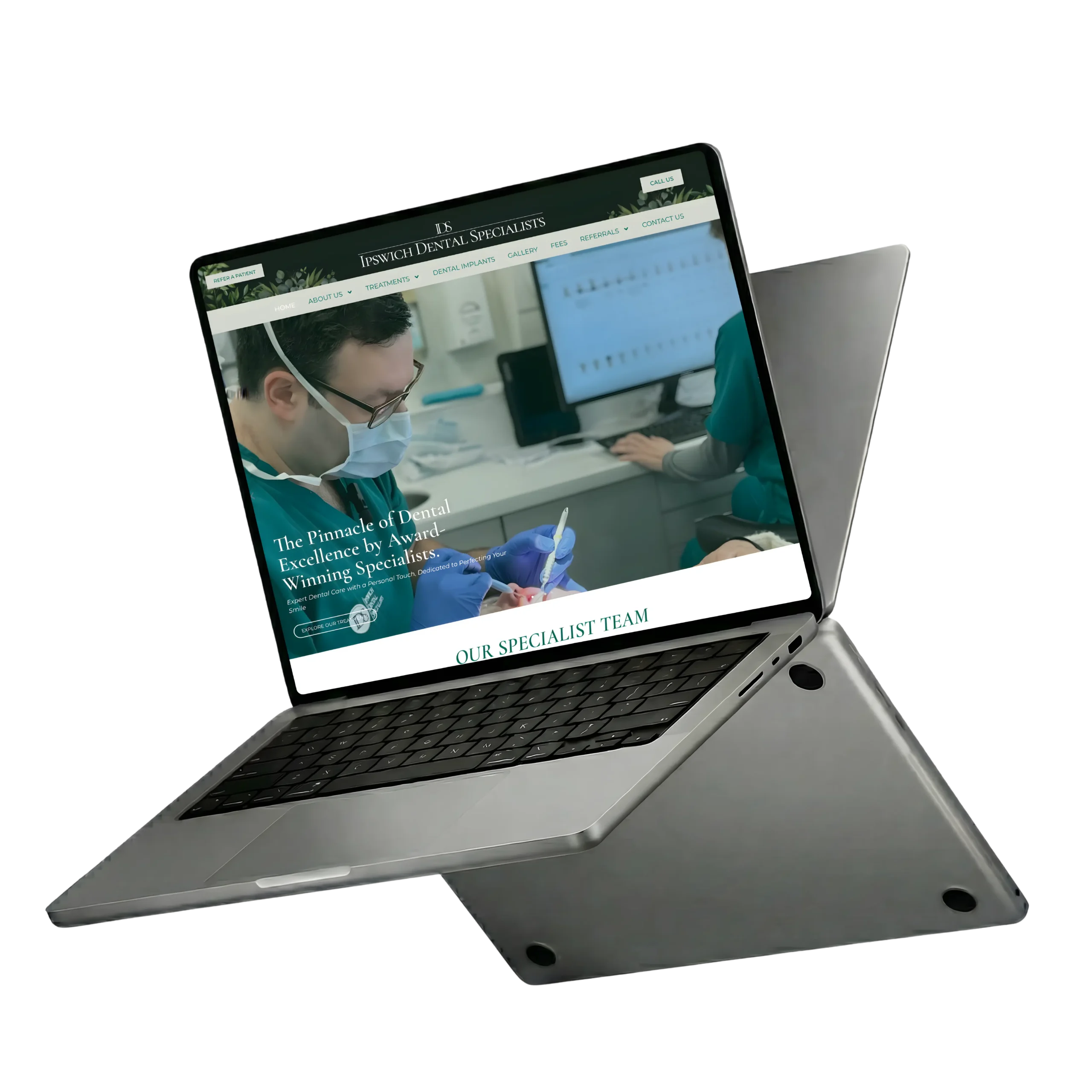
For many prospective patients, your website is the first impression of your practice. As online behaviour evolves, patients expect more than a brochure-style website. Instead, they want a site that loads fast, works on any device, answers their questions clearly and helps them take action.
A high-performing dental website in 2026 must meet these expectations and more if it is to convert visitors into booked appointments.
Built Around User Behaviour and Performance
The most effective dental websites are designed around how users behave, not just how they look. Heat maps and scroll tracking show that visitors decide quickly whether a site feels trustworthy and relevant. Websites that fail to load fast or make key information hard to find tend to lose potential patients immediately. A high-performing dental website should prioritise speed, clarity and ease of use, ensuring that patients find what they need with minimal friction. Slow load times, confusing menus or buried contact details undermine credibility and increase abandonment rates, even if the design looks modern on the surface.
Mobile experience is critical. With most patients searching from smartphones, a responsive design isn’t optional – it’s expected. Your site should work seamlessly on any screen and make actions like calling, booking or navigating services effortless. A mobile-first approach improves user experience and supports better search engine rankings, which are increasingly influenced by mobile signals and performance metrics.
Strong SEO Architecture and Local Relevance
Technical SEO is the backbone of visibility. A high-performing dental website must be built with SEO in mind from the ground up. Clear, descriptive page URLs help both users and search engines understand your content and improve click-through rates from search results. Logical site structure and internal linking ensure content is easy to navigate and index, which boosts search performance over time – especially for local and treatment-specific queries like “Invisalign in London” or “emergency dentist near me”.
Local SEO also matters more than ever. Your Google Business Profile needs to be optimised and aligned with your website content so that your practice appears in local search and map results for relevant queries. Consistency across directories and citation sources reinforces authority and boosts local visibility.
Content That Educates and Converts
Content remains a core part of a high-performing dental website. Patients arrive looking for clear answers to their questions. Service pages should describe treatments in everyday language, outline what patients can expect, address common concerns, and guide visitors toward the next step. Educational blogs and FAQs help patients make informed decisions and support search visibility by targeting long-tail keywords relevant to local search demand.
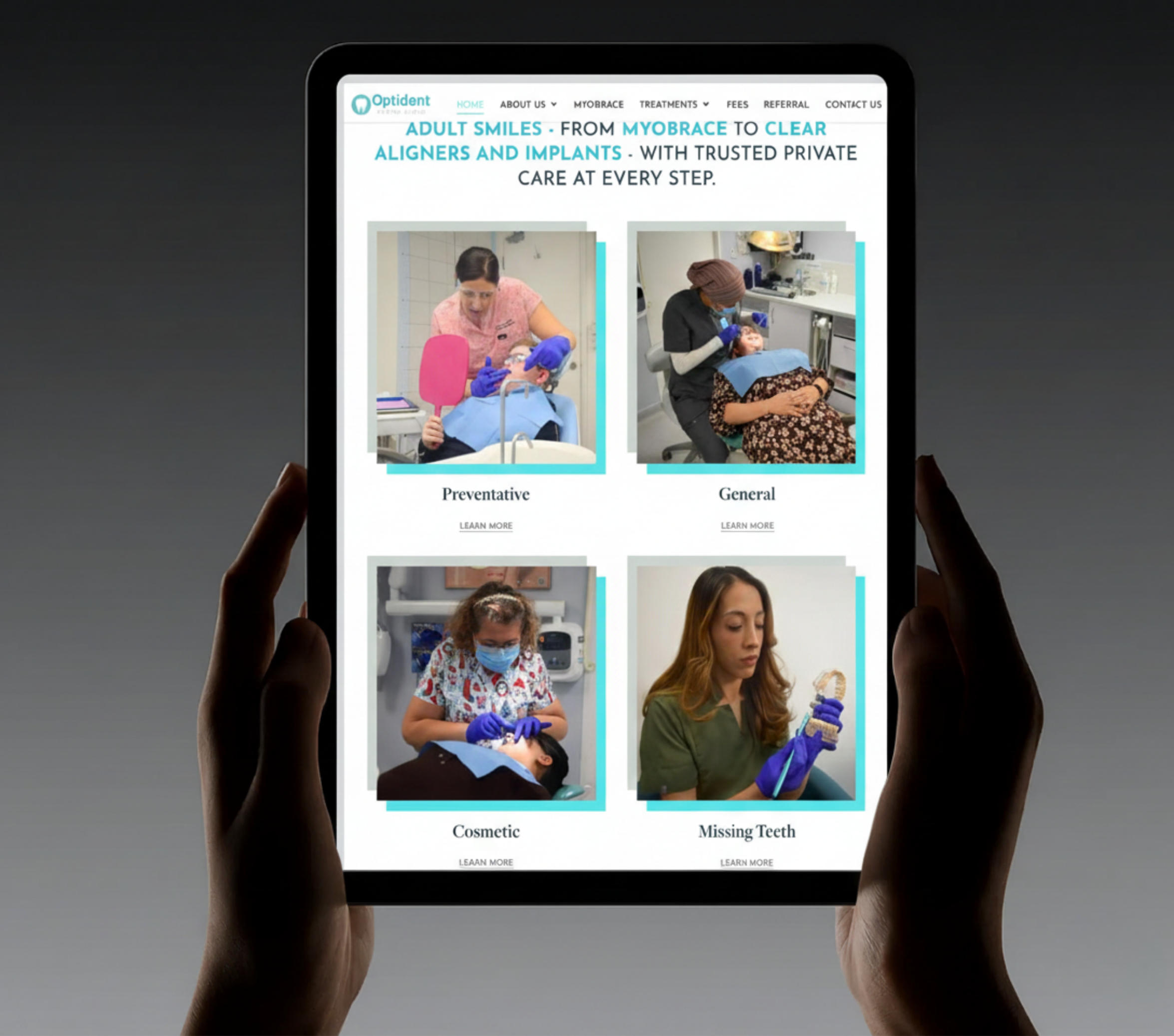
Authentic, original content also enhances trust. High-quality images of your clinic, team, and equipment help patients form a personal connection before they visit. Videos that explain procedures or introduce team members can further reduce anxiety and increase conversions. Content that genuinely reflects your practice’s expertise and personality sets you apart from generic template sites that lack depth or substance.
Built-In Trust and Conversion Features
A high-performing dental website must make it easy for visitors to take action. Prominent calls to action – such as “Book a Consultation” or “Call Now” – should be visible throughout the site. Online booking integrations, contact forms, and click-to-call buttons reduce barriers to enquiry and match modern patient expectations. Trust signals such as patient testimonials, star ratings, and professional credentials like GDC registration enhance credibility and reassure visitors that your practice meets recognised standards of care.
Conversion tracking and analytics should be set up from launch to monitor which pages and elements are driving engagement and enquiries. This data allows ongoing optimisation, ensuring the website continues to improve and perform as patient behaviour evolves.
FINAL THOUGHTS
A high-performing dental website in 2026 blends performance, search visibility, clear content, and trust-building features into one cohesive online experience. It should answer patient questions before they ask, make essential information easy to find, and guide visitors toward taking action. With expectations higher than ever, investing in a website that ticks all these boxes will help your practice attract and convert more patients. If your current site isn’t delivering the results you want, Dentify Digital can help transform it into a high-performing dental website that boosts visibility and bookings — get in touch to future-proof your online presence and grow your patient base.